



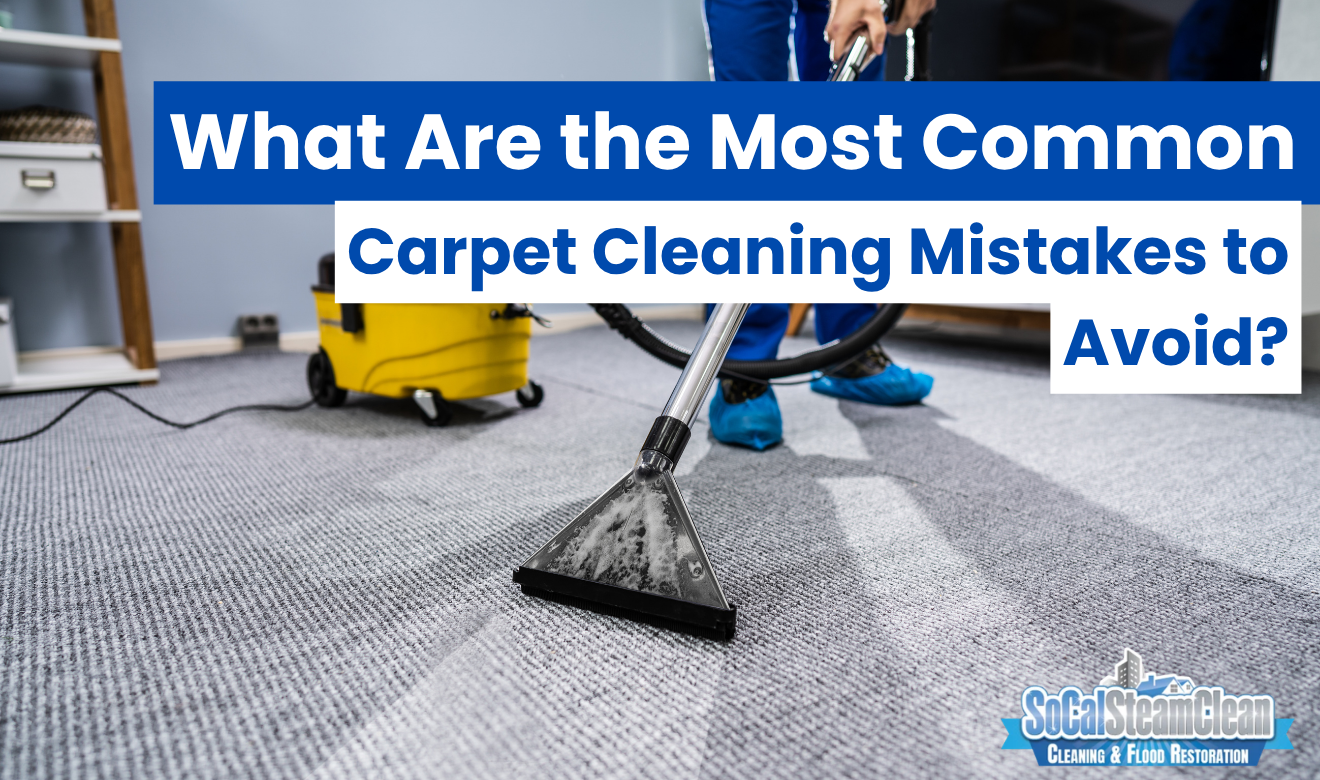
Executive Summary
Most carpet-cleaning problems come from a few preventable errors—especially over-wetting, overusing detergent, and aggressive scrubbing—which push soil deeper, leave residue, and cause odors or “wick-back” stains. Cleaning effectively is less about stronger chemicals and more about correct technique: remove dry soil first, use minimal moisture, extract thoroughly, and dry fast.
Key Takeaways
- Over-wetting causes deeper damage — Too much water spreads stains, saturates the pad, slows drying, and increases odors and reappearing stains from wicking.
- Too much soap leads to rapid re-soiling — Excess detergent leaves a sticky residue that attracts dirt, making carpets look dull again soon after cleaning.
- Scrubbing makes stains and wear worse — Aggressive agitation can fray or distort fibers and push contamination deeper, so blotting and gentle lifting are more effective.
- Fast response prevents permanent-looking stains — Treating spills immediately (with cool water first for unknown/protein stains) reduces bonding, oxidation, and lingering discoloration.
- Method, chemistry, and drying speed matter — Vacuuming thoroughly, avoiding risky chemical mixing, rinsing/extracting spotters, and accelerating drying are key to preventing residue, discoloration, and musty odor.
The most common carpet cleaning mistakes to avoid are using too much water or soap, scrubbing stains aggressively, and waiting too long to treat spills. These slip-ups can push dirt deeper into the fibers, leave a sticky residue that attracts more grime, or even cause musty odors from trapped moisture. For example, soaking a coffee spill with water can spread the stain and seep into the pad, and scrubbing a pet accident can fray the carpet and lock the smell in. If you want your carpet to look better (not worse) after cleaning, it helps to know these mistakes before you grab the spray bottle and brush.
Why these slip-ups matter more than you think
Many common carpet cleaning mistakes to avoid don’t look “serious” in the moment—until you notice wicking stains that return, crunchy fibers, dull traffic lanes, or lingering odors. The reason is simple: carpet is a system (fiber + backing + pad). When moisture, soil, and detergent get pushed past the surface, the problem becomes harder to fix with DIY tools.
Industry guidance also supports using the right method and chemistry. The carpet cleaning overview explains why different soils and fibers require different approaches—meaning a one-solution-fits-all spray and scrub routine often backfires.
What are the most common carpet cleaning mistakes to avoid?
If you want a quick checklist for better results, these are the common carpet cleaning mistakes to avoid most likely to cause permanent-looking spots, odors, and rapid re-soiling:
- Over-wetting the carpet (especially on pet urine, coffee, or large spills)
- Using too much soap or the wrong detergent (sticky residue attracts dirt)
- Scrubbing aggressively (damages pile and spreads stains)
- Waiting too long to treat spills (stains set and oxidize)
- Skipping dry soil removal (not vacuuming thoroughly first)
- Using hot water on protein stains (can “cook” blood, milk, or pet mess into fibers)
- Mixing chemicals (can discolor carpet and create harmful fumes)
- Not rinsing/extracting after spotters (leaves residue behind)
- Not drying fast enough (musty odor, risk of microbial growth)
- Ignoring fiber type and dye stability (bleaching, fading, texture change)
Keep this list handy—most “mystery stains” after cleaning come from one of these common carpet cleaning mistakes to avoid.
How to clean carpet without over-wetting it
Over-wetting is one of the most expensive common carpet cleaning mistakes to avoid because water can carry soil and dye deeper, soak the pad, and slow drying dramatically.
Use the “less liquid, more extraction” rule
- Blot first with clean white towels to remove as much liquid as possible.
- Mist, don’t pour: apply cleaning solution lightly to the towel or surface.
- Dwell time beats soaking: give the cleaner a few minutes to work (per label).
- Extract repeatedly: press dry towels firmly or use a wet/dry vacuum designed for extraction.
Real-world example: coffee spill
A common scenario: someone dumps water onto a coffee spot to “dilute it.” Instead, the brown tannins spread outward and downward. Hours later, the visible stain is bigger, and the pad may hold odor. This is exactly why “soak and hope” is among the common carpet cleaning mistakes to avoid.
Why using too much soap makes carpets look dirtier
Residue is a top reason carpets look clean for a day and then quickly turn gray again. When shampoo or dish soap is overused, it can leave behind a slightly sticky film. That film grabs and holds soil—especially in high-traffic lanes.
Signs you used too much detergent
- Carpet feels crunchy or stiff when dry
- Area looks duller or attracts dirt faster
- You see foam during blotting/rinsing even after multiple passes
How to fix residue (without making it worse)
- Lightly rinse with plain water (minimal moisture).
- Extract/blot repeatedly until towels stop picking up suds.
- Speed-dry with airflow (fans + AC/dehumidification).
This is one of the common carpet cleaning mistakes to avoid that’s easy to prevent: measure products carefully and don’t “double dose.”
How to remove stains without scrubbing the carpet
Aggressive scrubbing is a classic entry on every list of common carpet cleaning mistakes to avoid. It can distort the pile, fuzz the fibers, and push soil deeper. With some carpet styles (like loops), rough agitation can even snag and permanently damage the construction.
Better technique: blot, lift, repeat
- Scoop solids with a dull edge (spoon), don’t smear.
- Blot from the outside in to prevent spread.
- Use gentle tamping (pressing) instead of scrubbing.
- Rinse lightly and extract so you don’t leave cleaner behind.
What to do in the first 60 seconds after a spill
Waiting is one of the common carpet cleaning mistakes to avoid because many stains oxidize or bond to fibers over time. The “first minute” approach keeps most spills from becoming permanent-looking.
- Blot immediately (paper towels are okay short-term, but switch to cloth towels).
- Don’t rub—it spreads and frays fibers.
- Use cool water first for unknown stains (hot water can set proteins).
- Work outward to inward to control the boundary.
How vacuuming mistakes sabotage deep cleaning
Skipping thorough vacuuming is one of the most overlooked common carpet cleaning mistakes to avoid. Dry soil (sand, grit, dust) behaves like tiny blades inside carpet. When you add moisture without removing it, you can create muddy slurry that’s harder to extract.
Vacuuming for better cleaning results
- Vacuum slowly (fast passes leave soil behind).
- Do 2–4 passes in traffic areas.
- Empty bag/bin and clean filters—full bins reduce suction.
Credible data point: The U.S. Environmental Protection Agency notes that pollutants can be found in much higher concentrations indoors than outdoors, and carpets can act as reservoirs for dust and particles—making removal (via vacuuming + proper extraction) important for indoor air quality. (Source: EPA Indoor Air Quality guidance)
What cleaning products are risky (and what to use instead)
Using the wrong product is another big category of common carpet cleaning mistakes to avoid. Some household staples can permanently discolor or weaken carpet fibers.
Products that commonly cause problems
- Chlorine bleach: can remove dye and weaken fibers.
- High-pH degreasers: can damage wool and cause browning.
- Dish soap: often leaves heavy residue and excessive suds.
- Vinegar used incorrectly: can affect some dyes/fibers and doesn’t “neutralize” every stain type.
- Mixing ammonia + bleach: can create toxic chloramine fumes (serious safety hazard).
Safer approach
- Use carpet-labeled spotters and follow dilution directions exactly.
- Patch test in an inconspicuous area (closet corner) and blot with a white towel to check dye transfer.
- When in doubt—especially for wool, antique rugs, or unknown fibers—avoid DIY chemistry escalation (a major common carpet cleaning mistakes to avoid).
How long should carpet take to dry (and how to prevent musty odor)
Slow drying is one of the common carpet cleaning mistakes to avoid because damp carpet can smell musty and, in some conditions, support microbial growth. Many professional hot-water-extraction cleanings aim for same-day drying with proper airflow and controlled moisture.
Drying best practices
- Turn on fans and run AC to reduce humidity.
- Keep foot traffic minimal until fully dry.
- Open curtains/blinds to increase warmth and evaporation (if safe for furnishings).
- Avoid over-applying protector or deodorizer on damp carpet.
Credible data point: The CDC notes that after water intrusion, drying should happen quickly (commonly within 24–48 hours) to reduce mold risk. While routine carpet cleaning isn’t a “flood,” the principle is the same: faster drying reduces odor and microbial issues. (Source: CDC Mold guidance)
When DIY spot cleaning turns into “reappearing stains”
If a stain disappears and then comes back, it’s usually wicking: residue and soil in the pad/backing move upward as the carpet dries. This is one of the common carpet cleaning mistakes to avoid tied directly to over-wetting and incomplete extraction.
How to reduce wicking
- Use minimal moisture and extract thoroughly.
- Place a clean towel with a weight on top (like a book wrapped in plastic) to draw moisture up while drying.
- Don’t apply heat too aggressively—rapid surface drying can pull material upward.
If this happens often, it may be time for a deeper rinse-and-extract approach rather than repeated surface spot cleaning—repetition is itself one of the common carpet cleaning mistakes to avoid.
What method fits your carpet: a quick comparison table
Different fibers, soil loads, and moisture tolerance levels call for different approaches. Choosing the wrong method is one of the common carpet cleaning mistakes to avoid.
| Method | Best for | Main risk if done wrong |
|---|---|---|
| Hot water extraction | Deep soil removal, rinsing residues, many synthetic carpets | Over-wetting, slow drying, wick-back if under-extracted |
| Low-moisture encapsulation | Maintenance cleaning, commercial traffic lanes, faster drying | Residue and rapid re-soiling if product overused or not vacuumed out |
| Bonnet cleaning | Surface appearance improvement, quick touch-ups | Can leave soil deeper; risk of swirl marks or residue |
| DIY rental machine | Occasional deep cleaning when used carefully | Too much water/soap; weak extraction; overwetting pad |
How to know it’s time to call a professional (and what service to look for)
Some situations are high-risk for DIY, and trying anyway can become the biggest of all common carpet cleaning mistakes to avoid—because the “fix” can lock in odor or spread contamination.
Call for help when you see:
- Pet urine that soaked through (odor persists after surface cleaning)
- Large areas of discoloration or repeated wick-back
- Water intrusion from leaks or flooding (pad saturation risk)
- Delicate fibers (wool, specialty blends) or unknown carpet type
If odors are part of the issue, targeted treatment matters more than fragrance. Consider professional Odor Removal in San Diego when smells linger after cleaning—masking odor is another of the common carpet cleaning mistakes to avoid.
What a “good” at-home spot clean looks like (simple, repeatable steps)
Use this as a practical template to avoid the most common carpet cleaning mistakes to avoid while keeping results consistent.
- Vacuum around the area first (remove grit that can grind in).
- Blot fresh spills immediately with a white towel.
- Apply a carpet-approved spotter lightly (don’t saturate).
- Dwell per label directions.
- Blot and lift (no aggressive scrubbing).
- Light rinse with minimal water if needed.
- Extract/dry with towels + airflow until fully dry.
Want cleaner carpets that stay clean? Here’s the pro-level mindset
The best results come from preventing the common carpet cleaning mistakes to avoid before they happen: control moisture, minimize residue, remove dry soil first, and match your method to the stain and fiber.
If you want to go deeper on keeping carpets looking good between deep cleanings, see these carpet cleaning tips in San Diego for practical upkeep habits that reduce re-soiling and extend the time between major cleanings.
Clean Smarter, Not Harder
Avoiding the common carpet cleaning mistakes to avoid is less about buying stronger chemicals and more about using better technique: blot instead of scrub, measure products, extract thoroughly, and dry fast. Those fundamentals prevent most stain “comebacks,” protect the carpet’s texture, and reduce the chance of lingering odors.
For added peace of mind, look for technicians trained and certified through recognized industry programs (such as IICRC cleaning and restoration certifications) and follow manufacturer care guidelines—because carpet performance and warranty coverage often depend on using approved methods and avoiding the same common carpet cleaning mistakes to avoid that cause premature wear.
Frequently Asked Questions
Stop the Stain Comebacks—Get a Pro Clean That Actually Stays Clean
DIY carpet cleaning is where good intentions go to die—especially when over-wetting, over-soaping, or scrubbing turns a small spill into a bigger (and smellier) problem. If you’re dealing with reappearing stains, lingering pet odor, or carpets that look dingy again way too fast, let SoCal Steam Carpet handle it the right way with professional-grade extraction, residue-free rinsing, and fast drying that protects your fibers and your pad.