San Diego renters are seeing a confusing new reality: some landlords are issuing rent increases as high as 8.2%, while many tenants believe California’s rent cap should prevent anything that steep. The gap between what people expect and what the law actually allows is creating frustration across San Diego County—and it’s also changing how residents think about where they live, what they can afford, and how to protect their homes.
When housing costs rise, people often stay put longer, move less often, and try to “make do” with their current space. In San Diego, that frequently means delaying non-urgent home care—until a small issue turns into a costly one. For renters and landlords alike, one of the most overlooked areas is indoor upkeep, especially carpets and upholstery that quietly collect allergens, odors, and stains over time.
Why an 8.2% Rent Increase Is Showing Up in San Diego
Who is affected
San Diego tenants in certain rental units—especially those covered under California’s statewide rent stabilization rules—are asking why their rent can jump by 8.2%. Landlords and property managers, meanwhile, are trying to operate within the legal limits while keeping up with their own rising costs. The CBS 8 report highlights the real tension this creates locally, as renters try to determine what’s legal and what isn’t.
What happened
The news centers on rent increases reaching 8.2% in San Diego. While many renters assume there is a strict “5% cap,” California’s Tenant Protection Act formula can allow higher increases depending on the year’s inflation measure—up to a maximum cap. That’s where the 8.2% figure comes into play for some properties, even if it sounds surprising at first glance.
Where this is happening
This is playing out in San Diego, California, where rental demand remains high and affordability is a constant concern. The impact is neighborhood-by-neighborhood, because not every unit is covered by the same rules, exemptions, or local factors.
When it matters most
It matters at lease renewal time, after notices go out, and whenever tenants are deciding whether to stay, negotiate, or relocate. In San Diego, these moments often coincide with bigger household decisions—budgeting, roommate changes, downsizing, or preparing a unit for turnover.
Why the number can be legal
California’s rent cap rules are not a flat percentage for all years and all units. The statewide cap is commonly described as “5% plus inflation” (subject to a maximum limit), and the inflation component can push the allowable increase higher in certain years. That’s why some San Diego landlords can legally arrive at 8.2% for covered units—while other units may be exempt altogether.
What Rent Hikes Change Inside a Home (And Why Carpets Become a Flashpoint)
When rent rises in San Diego, tenants frequently cut discretionary spending first. Professional cleaning is often postponed, especially if stains or odors seem manageable. But carpets function like a filter: they trap dust, dander, and debris deep in the pile. Over time, that buildup can worsen indoor air quality, create persistent odors, and make a rental feel older than it is.
For landlords and property managers, higher rent expectations can also increase tenant expectations. If a unit is priced at a premium, renters tend to scrutinize cleanliness more closely—especially flooring. A dingy carpet can become a point of conflict at move-out, affecting security deposit disputes, turnover speed, and how quickly a unit can be re-rented in competitive San Diego neighborhoods.
Professional Carpet Cleaning Perspective: The Hidden Costs of “Waiting It Out”
From a carpet cleaning standpoint, the most expensive jobs are often the ones that could have been routine. Once spills set, pet odors soak into padding, or high-traffic lanes become impacted with soil, results can be harder to achieve and replacement becomes more likely.
In San Diego, where coastal humidity and year-round living patterns keep homes “active” (sand, outdoor dust, pets, kids, frequent guests), carpets can accumulate grime faster than many renters realize. When budgets tighten due to rent increases, the temptation is to delay cleaning—but that can lead to:
Permanent staining that impacts move-out charges
Lingering odors that make a unit harder to show or rent
Allergen buildup that affects comfort and perceived cleanliness
How This Connects to Carpet Cleaning Services in San Diego
Whether you’re a renter trying to protect your deposit or a landlord preparing for the next lease cycle, professional carpet cleaning is one of the highest-ROI maintenance steps you can take—especially in San Diego, California where turnarounds happen fast and first impressions matter.
For tenants, a documented professional cleaning can help show good-faith care of the unit and reduce disputes over “normal wear and tear” versus damage. For landlords and property managers, cleaning between tenants can shorten vacancy time, reduce odor complaints, and support a higher-quality listing presentation—important when rents are under scrutiny.
Socal steam clean provides professional carpet cleaning that helps San Diego residents and property owners maintain cleaner, fresher interiors—especially helpful during lease renewals, move-outs, and unit refreshes.
Why This Matters Specifically in San Diego, California
San Diego’s rental market pressures don’t just change monthly budgets—they shape how people maintain their living spaces. In San Diego, California, tenants often stay longer when rent is high, meaning carpets see more years of use between full resets. At the same time, landlords in San Diego may aim to justify higher rents with better-looking interiors, making flooring cleanliness a practical priority.
Across San Diego County, professional carpet cleaning can be a strategic step: it supports tenant satisfaction, reduces complaints, and helps properties compete—without the cost of full flooring replacement.
Actionable Takeaways for Renters and Landlords Right Now
If your rent is increasing, review your unit type and exemption status; not all properties fall under the same California rules.
Renters: before move-out, schedule professional carpet cleaning to reduce deposit disputes tied to stains, pet odors, or heavy traffic areas.
Landlords/property managers: clean carpets between tenants to improve showings and reduce time on market in San Diego.
Don’t wait for “visible dirt.” Deep soil and odors can build beneath the surface and become harder (and more expensive) to fix later.
Keep records—cleaning receipts and condition photos help both sides when questions come up.
Frequently Asked Questions
Can a landlord legally raise rent by 8.2% in San Diego, California?
In some cases, yes. California’s statewide rent cap is often described as 5% plus inflation (with a maximum limit), and the inflation factor can make the allowable increase higher in certain years. Whether it applies depends on the property type and exemptions. Review your notice carefully and verify coverage.
How do rent increases affect move-out cleaning expectations for tenants?
Higher rents often come with higher expectations about condition. Even if rules on deposits don’t change, tenants may face closer scrutiny of stains, odors, and wear. Professional carpet cleaning before move-out can help reduce disputes by improving appearance and providing documentation that you maintained the unit responsibly.
Is professional carpet cleaning worth it for landlords between tenants?
Often, yes. Clean carpets can improve listing photos, reduce odor complaints, and speed up showings—especially in competitive San Diego neighborhoods. Compared with replacement, professional cleaning is typically a lower-cost way to refresh a unit and support a strong first impression for prospective renters.
What are common carpet issues in San Diego rentals?
San Diego homes often deal with tracked-in sand, outdoor dust, pet odors, food spills, and high-traffic wear patterns. These problems can sit deep in the fibers and padding even when carpets look “mostly fine.” Regular steam cleaning helps remove embedded soil and refresh the feel of the space.
When should I schedule carpet cleaning—before a showing, renewal, or move-out?
For landlords, schedule cleaning right after a tenant moves out and before photos/showings. For tenants, book it shortly before your final walkthrough so carpets look and smell fresh. If you’re renewing and staying long-term, routine cleaning every 6–12 months can help prevent permanent wear and staining.
Keeping Rentals Competitive and Comfortable During a Cost Crunch
Rent increases and rent-cap confusion are putting pressure on San Diego households and rental owners alike. One practical way to protect your space—and avoid avoidable conflicts—is to keep flooring in good condition with professional deep cleaning.
If you’re preparing for a move-out, refreshing a unit for new tenants, or simply trying to keep your San Diego home healthier and cleaner, contact Socal steam clean to schedule carpet cleaning service.
This article is a commentary-based rewrite for informational purposes, based on this source.
Carpet sanitizing and deodorizing in San Diego works when technicians first identify the true odor source (often urine or moisture in padding), then remove residues with controlled hot water extraction and apply targeted enzyme and EPA-registered antimicrobial products with proper label-required dwell time and drying. Lasting results depend on moisture control and confirming whether contamination extends beyond carpet fibers into padding or subfloor where deeper remediation or replacement may be required.
3 Core Insights
Source Identification Comes First: UV mapping, moisture checks, and spot testing prevent “surface-only” treatment that leads to odor rebound through wicking and off-gassing.
Process Order Determines Results: Dry soil removal, correct pre-treatment/agitation, extraction rinsing, and then (when justified) label-compliant sanitizing produce neutral odor outcomes rather than fragrance masking.
Dry Time and Padding Decide Longevity: Coastal humidity makes fast drying essential, and persistent smells after full dry-down usually indicate pad/subfloor involvement that cleaning alone cannot fully resolve.
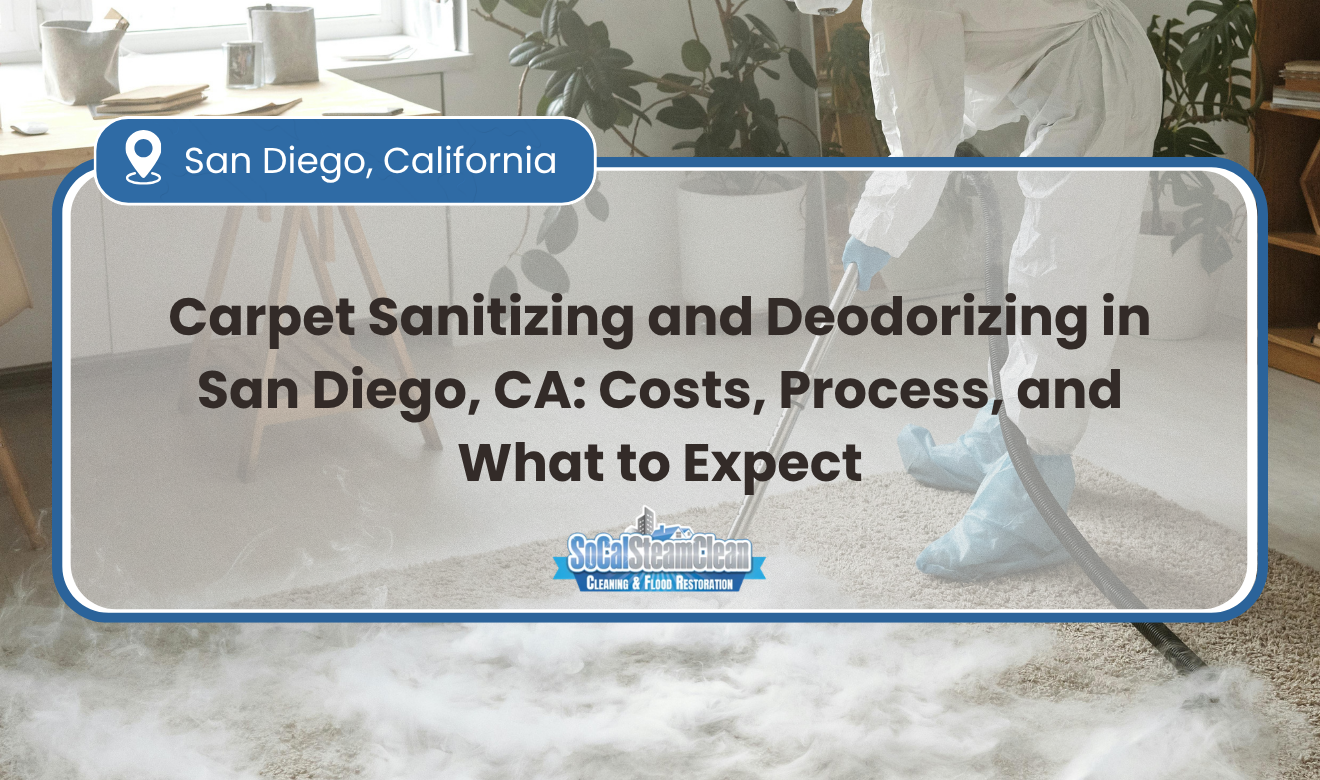
Carpet sanitizing and deodorizing is a professional cleaning process that removes odor sources and reduces bacteria, allergens, and microbial contamination in carpet fibers and padding. In San Diego, carpet sanitizing and deodorizing San Diego services typically combine hot water extraction, targeted enzyme treatment for organic residues, and an EPA-registered disinfectant applied at the correct dwell time. Expect odor diagnostics first, including pet urine mapping with UV light in areas like hallways, living rooms, and stairs where wicking is common. Technicians often pre-treat high-traffic lanes with an alkaline detergent, agitate the pile, then rinse-extract at controlled temperatures to prevent delamination on older glue-down installations. For coastal neighborhoods with higher humidity, deodorizing steps may include faster dry protocols, extra air movement, and padding evaluation when urine or moisture has soaked below the face yarn. Typical examples include removing sour smells from spilled milk in family rooms, musty odors from marine layer dampness near windows, and pet odors concentrated at door thresholds after frequent walks. Costs usually depend on square footage, odor severity, spotting complexity, and whether antimicrobial treatment and urine decontamination are needed, with pricing commonly set per room, per area, or per square foot.
What “Sanitizing + Deodorizing” Means for Carpets (and What It Does Not)
Sanitizing targets microorganisms and contamination on and within the carpet system, while deodorizing targets the odor source rather than covering it with fragrance. A professional process also verifies material compatibility and uses an EPA-registered product according to its label directions, including dwell time.
In real homes, odor and “dirty carpet smell” usually come from a combination of:
Organic residues (pet urine, feces, vomit, food spills, body oils) that feed odor-causing bacteria.
Moisture retention in padding or along tack strip edges, especially in coastal humidity and marine layer conditions.
Particulate buildup in traffic lanes that holds odors and allergens (fine soil, dander, pollen).
What the process does not do: it does not “sterilize” a home like a medical facility, and it cannot permanently eliminate odors if contamination remains in subfloor, baseboards, drywall, or padding that is beyond surface treatment. Proper scope is determined during inspection and testing.
How Technicians Identify the True Odor Source in San Diego Homes
Effective deodorizing starts with source identification—because treating only the surface typically leads to odor return through wicking and off-gassing. A correct diagnostic routine documents where contamination is located (face yarn, backing, cushion, or subfloor) and chooses the least invasive method that actually works.
Common professional odor diagnostics include:
UV/blacklight inspection to locate likely urine deposits, especially along hallway edges, living room corners, and stair landings.
Moisture checks using non-invasive meters to identify damp padding, slab moisture transfer, or chronic window condensation zones.
Fiber and construction ID (nylon, polyester, olefin; tufted vs. woven; glue-down vs. stretch-in) to prevent damage during extraction.
Spot testing to confirm colorfastness and evaluate stain/odor chemistry before applying alkaline pre-sprays, oxidizers, or enzymes.
San Diego-specific realities that affect diagnosis: coastal humidity slows drying; beach sand and fine soil load traffic lanes; and slab-on-grade homes can hold moisture in padding if there’s repeated wetting (pets, spills, or minor plumbing issues).
Step-by-Step Professional Workflow: From Pre-Treatment to Verified Deodorization
A reliable workflow follows the IICRC carpet cleaning principles: dry soil removal, controlled chemical application, agitation, extraction/rinsing, and drying. Deodorization is layered in the correct order so odor molecules and bio-residues are removed or neutralized instead of trapped.
Below is a common structured sequence used for residential and light commercial jobs:
Dry soil removal (vacuuming)
HEPA filtration is preferred when odor is associated with dander/allergens.
Target edges and transitions where debris accumulates.
Pre-treatment and agitation
High-traffic lanes often receive an alkaline detergent to break oily soils.
Mechanical agitation lifts embedded soil and distributes chemistry evenly.
Targeted enzyme or bio-enzymatic treatment (organic odor zones)
Used for urine, milk, vomit, and other protein-based residues.
Applied to the affected area—not the entire home—based on mapping results.
Hot water extraction (HWE) with controlled temperature and rinse
Rinse-extraction removes suspended soil and residues that cause re-soiling and odor rebound.
Temperature and pressure are adjusted for older carpets and glue-down installations to reduce risk of seam issues or delamination.
Applied according to the product label, including contact (dwell) time and any required rinsing.
Not all situations require disinfection; it is typically justified after biological contamination or persistent odor events.
Drying acceleration
Air movers, ventilation, and controlled HVAC reduce dry times.
Fast drying is critical in humid areas to prevent musty odor recurrence.
Post-inspection and odor verification
Walk-through confirms treated areas and sets realistic expectations if padding/subfloor are implicated.
Guidance provided for re-entry, ventilation, and follow-up steps.
If you want a deeper overview of extraction-based cleaning fundamentals and why it’s the industry standard for deep flushing, see carpet cleaning.
Sanitizing Chemistry: What Matters for Safety, Label Compliance, and Results
Professional-grade sanitizing hinges on product registration and strict adherence to label directions because the label is the law under U.S. EPA pesticide regulations. The most important performance variables are dwell time, dilution accuracy, and whether the surface is clean enough for the sanitizer to work.
Key technical points that prevent failures:
Use of EPA-registered antimicrobial products intended for porous or soft surfaces when applicable; many disinfectants are only labeled for hard, non-porous materials.
Correct dilution ratios measured with dedicated chemical dispensers (over-concentration can leave residues; under-dosing reduces efficacy).
Required dwell time maintained on the treated fibers—premature drying can invalidate performance claims.
Compatibility checks to reduce risk of bleaching, dye migration, or texture distortion, especially on wool or specialty carpets.
Practical safety controls used on-site include adequate ventilation, controlled application (not over-wetting), and clear occupant guidance for children, pets, and chemically sensitive individuals.
When Odor Removal Requires More Than Cleaning: Padding, Subfloor, and Replacement Triggers
Not all odors can be solved from the carpet face fibers; urine and moisture often migrate into cushion and subfloor where extraction cannot fully reach. The decision point is whether contamination is superficial, moderate (pad involved but salvageable), or severe (replacement or restorative work required).
Typical indicators that padding evaluation or partial replacement is necessary:
Repeated odor return after prior cleanings (classic sign of wicking from cushion or tack strip).
Strong odor at transitions (door thresholds, baseboards, stairs) where urine concentrates.
Visible staining that reappears after drying despite extraction—often indicates deep saturation.
Musty smell plus elevated moisture near windows or sliding doors where condensation or minor leaks persist.
If contamination extends beyond carpet and cushion (e.g., subfloor or wall plate), the scope may shift toward odor removal methods that treat building materials—not just textiles.
Core Metrics That Determine Outcome: Heat, Moisture Control, and Dry Time
Odor control succeeds when cleaning removes residues while drying prevents microbial regrowth and “wet dog” or musty odor formation. The controllable variables are temperature, airflow, and how much water is introduced versus recovered.
Feature / Metric
Specifications
Local Guidelines
Disinfectant/Sanitizer compliance
Use EPA-registered product; follow label dilution, application method, and contact (dwell) time.
In San Diego homes with kids/pets, request label-based re-entry guidance and ventilation steps during application.
Moisture management
Limit over-wetting; maximize recovery with extraction passes; use air movers when needed.
Coastal humidity and marine layer conditions often require extra air movement to avoid musty odor rebound.
Odor-source verification
UV mapping + spot testing to confirm urine/organic residues before selecting enzymes/oxidizers.
Focus on hallways, living rooms, and stairs where wicking and repeat marking are common.
Carpet construction risk control
Adjust heat/pressure for older glue-down or delicate fibers to reduce delamination and seam stress.
Older coastal properties may have legacy installations; controlled-temperature rinsing helps prevent adhesive-related issues.
Common San Diego Odor Scenarios and the Correct Treatment Match
Different odors require different chemistry and procedures; treating everything the same wastes time and can lock in residues. Matching odor type to a verified source is the fastest way to stop recurrence.
Examples of frequent cases and what typically works:
Persistent mustiness may indicate damp pad or adjacent material involvement.
General “old carpet” odor in high-traffic lanes
Thorough dry soil removal + alkaline pre-treatment + hot water extraction rinse.
Optional fiber rinse to reduce sticky residue that traps odors.
Pricing Variables That Actually Change the Scope (Not Just the Square Footage)
Cost is primarily driven by contamination severity, the number of identified odor zones, and whether treatment must extend into padding or subfloor interfaces. Transparent quotes separate standard extraction cleaning from odor-source remediation steps like urine decontamination and antimicrobial application.
Expect estimates to account for:
Total area (per room, per square foot, or per defined zone).
Odor mapping results (few localized spots vs. widespread marking).
Spotting complexity (set-in stains, dye issues, staircases, or delicate fibers).
Level of treatment
Standard extraction cleaning
Targeted enzyme or oxidizer treatment
Antimicrobial/sanitizing application following label dwell time
Padding evaluation, lifting carpet in localized areas, or recommending replacement
Drying plan (air movers, dehumidification recommendations, access constraints).
How to Prepare Your Home So Sanitizing and Deodorizing Works the First Time
Preparation improves access to odor sources, speeds drying, and prevents recontamination immediately after service. Small steps—like clearing edges and providing airflow—directly affect results.
Before the appointment:
Pick up small items and breakables; clear closet thresholds and edge zones where pets mark.
Vacuum loose debris if possible (especially pet hair), unless the provider requests otherwise.
Plan for ventilation: confirm HVAC access, ceiling fan operation, and window usability.
Keep pets secured to prevent tracking damp fibers and to allow proper dwell time on treatments.
After service:
Prioritize drying: run HVAC fan mode if appropriate, and keep air moving until fully dry.
Avoid overwetting with DIY spotters while the carpet is drying; this can reactivate residues and cause wicking.
If odor persists in the same mapped areas after complete drying, request a reassessment focused on padding/subfloor involvement.
If you’re also comparing methods and practical expectations for an extraction appointment, reference what to expect during the carpet cleaning process to align timing, access, and dry-time planning.
San Diego Results Checklist: What “Done Right” Looks Like
A correct job leaves carpets residue-controlled, odor-source treated, and drying efficiently—without heavy fragrance masking. The most reliable indicator is stable odor improvement after full dry-down, not just immediately after the technician leaves.
Use this post-service checklist:
No sticky feel in traffic lanes (a sign of detergent residue that can trap odor and soil).
No odor rebound after drying (rebound often points to padding contamination or incomplete rinse).
Uniform appearance without new watermarking, browning, or reappearing spots.
Clear guidance provided on ventilation, re-entry, and any limitations discovered (pad/subfloor risks).
Lasting Freshness, Not Masking: The Takeaway for Healthier Carpets in San Diego
Professional carpet sanitizing and deodorizing works when it follows a verifiable chain: diagnose the source, remove residues with extraction, apply targeted treatments, and maintain label-compliant dwell time for any antimicrobial step. In San Diego’s humidity-prone microclimates, fast drying and padding evaluation are often the deciding factors between a one-time fix and repeating the problem.
When you choose a provider, prioritize documented odor mapping, construction-aware cleaning controls (especially for older glue-down carpet), and a drying plan that fits coastal conditions. The result should be a carpet that smells neutral after it fully dries—because the cause was removed, not covered.
Frequently Asked Questions
What does carpet sanitizing and deodorizing in San Diego actually include?
Carpet sanitizing and deodorizing in San Diego includes odor-source diagnostics, targeted enzyme treatment for organic residues, hot water extraction rinsing, and an EPA-registered sanitizer applied with label-required dwell time when justified. It focuses on removing and neutralizing odor sources, not masking them with fragrance.
How do professionals find pet urine and hidden odor sources in carpets?
Professionals find pet urine and hidden odor sources using UV/blacklight mapping, moisture meter checks, and spot testing. They document whether contamination is in face yarn, backing, padding, or subfloor. This prevents treating only the surface and reduces odor return from wicking.
Will sanitizing and deodorizing permanently remove pet and musty odors?
Sanitizing and deodorizing removes odors when the contamination is fully treated within the carpet system. Odors can return if urine or moisture has soaked padding, tack strip edges, or subfloor. Persistent rebound after full drying indicates deeper involvement that may require pad replacement or additional remediation.
Why is fast drying important for carpet deodorizing in coastal San Diego?
Fast drying prevents musty odor rebound and microbial regrowth in humid coastal conditions. Technicians control moisture by limiting over-wetting, maximizing extraction recovery, and using air movers or ventilation. Dry-time management is a core factor in achieving a neutral smell after complete dry-down.
What affects the cost of carpet sanitizing and deodorizing in San Diego?
Cost depends on square footage, odor severity, number of mapped odor zones, and treatment level. Pricing increases with urine decontamination, antimicrobial application requiring dwell time, stair and spotting complexity, and any need to lift carpet for padding evaluation or localized pad replacement.
Stop the Smell at the Source—Before It Soaks In for Good
Carpet odors don’t “go away”—they spread. And when the real source is urine wicking from the padding, moisture trapped along tack strips, or organic residue buried in traffic lanes, DIY sprays and rental machines can actually make it worse by adding more water, pushing contamination deeper, and setting you up for the classic rebound smell a day or two later.
In San Diego, the operational risk is real: coastal humidity slows dry times, which increases the chance of musty odor recurrence and microbial growth. Over-wetting from consumer equipment can also trigger reappearing spots, browning, and in older glue-down installations, the kind of seam stress and delamination problems that turn a “simple refresh” into a repair or replacement decision.
A trained local pro doesn’t guess—they map the odor, identify where the contamination actually lives (face yarn vs. backing vs. padding vs. subfloor), use the right enzyme or sanitizer for the situation, and follow label-required dwell times so results aren’t just temporary fragrance masking. If you want your carpet to smell neutral after it fully dries—not “clean for an hour” and questionable by tomorrow—get it handled the right way the first time.
San Diego is heading into another high-risk beach weekend as Hurricane Genevieve sends stronger surf toward Southern California at the same time a major heatwave pushes more people to the shoreline. That combination—bigger waves plus bigger crowds—typically means more rescues, more injuries, and, for many households, more wet, sandy mess tracked indoors across carpets and rugs.
For families across San Diego County, this isn’t just a beach-safety story. It’s also a “what happens after you get home” story—when damp towels, saltwater-soaked gear, and fine sand grind into carpet fibers, creating odors, staining, and long-term wear if not cleaned properly.
What’s driving the spike in beach rescues and risks this weekend
Who is involved
San Diego Lifeguard Chief James Gartland warned that heavy surf and heat-driven crowds can overwhelm even experienced beachgoers. Meteorologist Alex Tardy of Weatherecho.com cautioned the surf could reach 5–7 feet, with sets potentially pushing 8–9 feet. Surfers Travis Scarbrough and Ryan Ybarra were highlighted at Ocean Beach for “shooting the pier,” an illegal and dangerous maneuver under the Ocean Beach Pier; Ybarra, a retired San Diego firefighter, openly acknowledged the risk and urged others not to follow.
What is happening
Powerful swell energy from Hurricane Genevieve is hitting south-facing beaches hard, while a significant heatwave is expected to pull larger-than-normal crowds to the water. Chief Gartland noted that Windansea alone recorded 107 rescues on a recent Saturday—an indicator of how quickly conditions can turn hazardous in San Diego when surf spikes.
Where it’s most intense
The strongest impacts are being seen at south-facing beaches such as Windansea and Black’s Beach, with Ocean Beach also drawing attention due to risky surf behavior near the pier. These areas often attract experienced surfers and swimmers, but the danger rises sharply when mixed with tourists, new surfers, and heat-stressed beachgoers.
When the danger window peaks
The heightened risk period centers around the coming weekend, when heat and surf align and beach attendance typically surges across San Diego, California.
Why this matters beyond the shoreline
In addition to the immediate safety concerns—rip currents, shore break injuries, and exhaustion—busy surf weekends often lead to secondary issues at home and in businesses: wet carpets, salty residue, sand abrasion, and mildew odors from damp floor coverings and upholstery. In coastal communities like San Diego, that “post-beach” damage can accumulate quickly, especially during heatwaves that tempt people to keep windows open and traffic in and out more often.
The hidden “after the beach” problem: sand, saltwater, and carpets
When surf is up, people carry more gear—wetsuits, boards, wax, towels—and everything comes home wetter. Saltwater and sand are a rough combination for carpet cleaning because:
Sand acts like tiny blades, cutting and fraying carpet fibers with each step, especially in high-traffic hallways and entryways.
Salt can dry into residue that attracts moisture, contributing to a sticky feel and faster re-soiling.
Dampness trapped in carpet padding can trigger musty odors and, in worst cases, microbial growth—particularly if items are piled on the floor after a long beach day.
For homes, rentals, and short-term vacation properties across San Diego, this becomes even more urgent during a heatwave because people may run fans instead of deep-drying the carpet properly, masking the problem rather than removing it.
Carpet-cleaning perspective: how to prevent permanent damage after a surf weekend
From a professional carpet-cleaning standpoint, the biggest mistake after a beach weekend in San Diego is waiting. The longer saltwater, sand, and organic debris sit in the carpet, the more they bind to fibers and settle into the padding.
This is where a targeted approach matters more than “just vacuuming.” Standard household vacuuming may remove surface grit, but it often leaves fine sand embedded deeper. Steam cleaning and hot-water extraction—done correctly—can lift that trapped debris, reduce residue, and help neutralize odors that come from damp beach gear.
How Socal steam clean connects to this week’s beach conditions
As San Diego braces for high surf and extreme heat, Socal steam clean helps homeowners and local businesses address the mess that follows: sanded-in carpets, saltwater stains, musty smells, and high-traffic wear after busy beach days.
If you live in San Diego, California—especially near Ocean Beach, Pacific Beach, La Jolla, or other coastal neighborhoods—this is the time to be proactive. A timely carpet cleaning after a high-traffic weekend can help extend carpet life, improve indoor air quality, and keep your home feeling fresh even when the weather pushes everyone outdoors.
Local San Diego reminders: safety at the beach and cleanliness at home
San Diego lifeguards are urging people to swim near staffed towers and ask where conditions are safest. That advice matters even more when south-facing beaches are seeing stronger swell energy. At the same time, San Diego residents can reduce home damage by setting up a simple “sand control” routine at the door—because what happens at Windansea, Black’s, or Ocean Beach often ends up ground into the carpet by Sunday night.
Actionable takeaways for San Diego residents this weekend
Swim near lifeguards and stay in designated swim zones; ask tower staff where currents are strongest before entering the water.
Avoid illegal and dangerous surf stunts like “shooting the pier,” which Ryan Ybarra specifically warned people not to attempt.
Before entering your home, shake out towels and gear outside and rinse sandy feet to reduce abrasive grit on carpets.
Vacuum entryways slowly (multiple passes) to pull up fine sand; don’t grind it in by rushing.
If carpet is damp or smells musty after a beach weekend, schedule professional steam cleaning quickly to prevent residue and odor from setting.
Frequently Asked Questions
Why are San Diego lifeguards expecting a busy weekend?
Hurricane Genevieve is generating stronger surf for Southern California while a heatwave is expected to drive larger crowds to the beaches. San Diego Lifeguard Chief James Gartland has pointed to recent rescue numbers as a sign that the combination of big waves and packed shorelines increases incidents quickly.
Which San Diego beaches are seeing the strongest swell?
South-facing beaches are taking the brunt of the swell energy. Chief Gartland specifically referenced areas like Windansea and Black’s Beach. Conditions can change fast, so beachgoers should check lifeguard guidance on-site and avoid entering the water when warning flags are posted.
What is “shooting the pier,” and why is it dangerous?
“Shooting the pier” is when a surfer rides a wave under a pier between pylons. The article described it as illegal under San Diego’s municipal code and inherently dangerous due to the risk of impact with the structure. Surfer Ryan Ybarra admitted it’s risky and urged people not to do it.
How does a surf weekend damage carpets in coastal San Diego homes?
Sand grinds into carpet fibers like abrasive grit, while saltwater residue can leave stiff spots, attract moisture, and contribute to odors. Damp beach gear placed on carpet can also wet the padding underneath. Quick cleaning and drying is key to preventing long-term wear and musty smells.
When should I schedule professional carpet cleaning after heavy beach traffic?
If your carpet feels gritty, looks darker near entryways, or develops a damp/musty smell, don’t wait. Scheduling steam cleaning soon after a high-traffic weekend helps remove embedded sand and residue before it bonds deeper into fibers and padding—especially important during humid coastal conditions in San Diego.
Need help getting sand and odors out of your carpet?
If this weekend’s surf and heatwave leaves your San Diego home with gritty carpets, saltwater spots, or lingering musty smells, Socal steam clean can help with professional carpet cleaning designed to lift embedded debris and refresh high-traffic areas. Acting quickly after a busy beach weekend can make the difference between a simple cleanup and long-term carpet wear.
This article is a commentary-based rewrite for informational purposes, based on this source.