



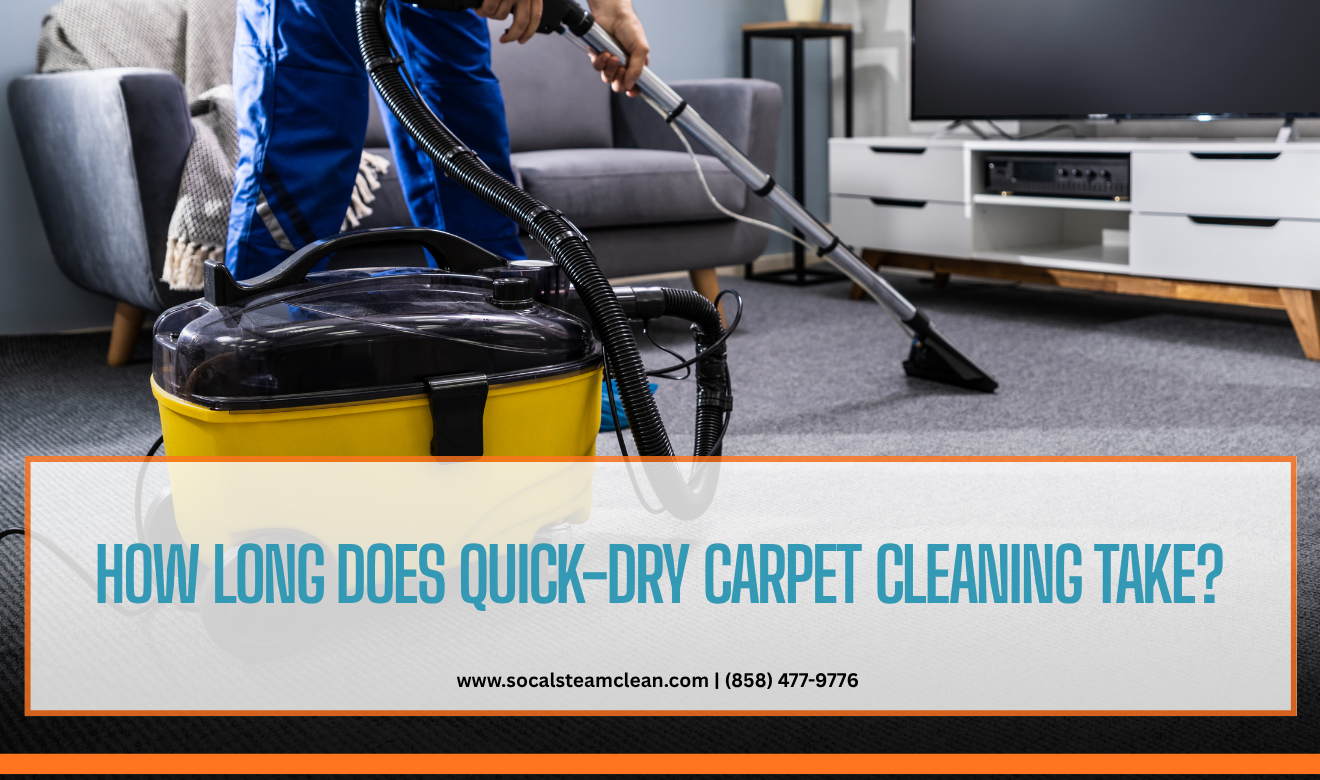
Executive Summary
Quick-dry carpet cleaning is defined by moisture control—using low-moisture methods, strong extraction, and airflow to reduce downtime while still delivering effective cleaning. In most homes, cleaning takes about 1–2 hours and carpets typically dry within 1–4 hours, depending on carpet type, soil level, humidity, and ventilation.
Key Takeaways
- Quick-dry means less residual moisture, not “instant dry”: The goal is to leave carpet fibers only slightly damp, though plush pile, humid weather, and wet padding can extend drying time.
- Method + extraction quality drive results: True quick dry carpet cleaning services rely on controlled water use, high-suction recovery, and multiple dry passes (or low-moisture systems like encapsulation) to shorten drying time.
- Airflow is the biggest controllable factor after cleaning: HVAC fan mode, ceiling/box fans, open doors, and dehumidifiers can significantly reduce dry time and help avoid lingering dampness.
- Drying speed impacts hygiene and odor risk: Faster drying helps reduce musty smells, lowers the chance of mold growth (often possible within 24–48 hours in damp conditions), and can reduce re-soiling.
- Set realistic timelines by room and conditions: A small bedroom may clean in 20–30 minutes and dry in 1–3 hours, while a living room often takes 45–60 minutes and may need 3–4 hours to fully dry.
Quick-dry carpet cleaning usually takes about 1 to 2 hours for the cleaning itself, and the carpet often dries in 1 to 4 hours afterward. In many homes, that means you can walk on it the same day without soggy socks or moving furniture around for ages. With quick dry carpet cleaning services, a small bedroom might be cleaned in 20 to 30 minutes and feel dry in a couple of hours, while a whole living room could take 45 to 60 minutes and need closer to 3 to 4 hours to fully dry. If you’re dealing with heavy soil, pet accidents, or thick plush carpet, expect the drying time to stretch a bit, especially on humid days.
What “Quick-Dry” Actually Means (and What It Doesn’t)
“Quick-dry” isn’t a single machine or magic chemical—it’s the result of using low-moisture methods, strong extraction, and airflow so carpets dry faster than traditional wet cleaning. Most quick dry carpet cleaning services aim to leave fibers only slightly damp rather than saturated.
What quick-dry usually means:
- Less water left behind after cleaning (better extraction or low-moisture systems).
- Shorter downtime so normal foot traffic can resume sooner.
- Cleaner results without the “wet carpet smell” that can happen when carpets stay damp too long.
What quick-dry does not mean:
- Skipping deep cleaning when it’s needed (heavy soil still needs agitation + rinse + extraction).
- Instant dryness in every situation (thick pile, humidity, and padding can slow drying).
How Quick Dry Carpet Cleaning Services Work
Most quick dry carpet cleaning services use one (or a combination) of these professional approaches, chosen based on carpet type, soil level, and drying-time goals.
Hot Water Extraction (with high-performance extraction)
This method (often called “steam cleaning,” even though it’s usually hot water, not steam) can still be quick-dry when technicians use:
- High-suction vacuum recovery
- Controlled water flow
- Proper wand technique and multiple dry passes
Done correctly, it delivers a deep rinse while keeping drying time closer to the 1–4 hour range mentioned in the introduction.
Low-Moisture Encapsulation
Encapsulation uses a polymer-based cleaner that crystallizes around soil as it dries. After drying, soils are removed through vacuuming. Many quick dry carpet cleaning services use encapsulation for:
- Maintenance cleaning
- Commercial spaces that need fast return-to-use
- Carpets that can’t stay wet long
Bonnet/Pad Cleaning (surface-focused)
This uses an absorbent pad to pick up soil from the top fibers. It can dry fast, but it’s typically more of a surface method—best for interim touch-ups, not always ideal as a stand-alone deep clean for homes with kids/pets.
What Affects Drying Time the Most?
If you want the fastest results from quick dry carpet cleaning services, these are the factors that matter most:
- Carpet fiber and construction: Dense or plush carpet holds more moisture than low-pile.
- Carpet pad condition: Older padding can retain moisture longer.
- Soil load: Heavily soiled areas may require extra passes and rinsing.
- Humidity and temperature: Higher humidity slows evaporation.
- Ventilation: Air movement is often the biggest controllable variable.
- Technician technique: Extra “dry passes” can noticeably cut drying time.
Why moisture management matters: the U.S. Environmental Protection Agency notes that mold can begin growing on damp materials within 24–48 hours under the right conditions—one reason fast drying is more than just convenience.
How Long It Takes: Room-by-Room Expectations
Every home differs, but the estimates below reflect common ranges for quick dry carpet cleaning services when the carpet isn’t unusually saturated and airflow is decent.
| Area | Typical cleaning time | Typical dry time (quick-dry setup) |
|---|---|---|
| Small bedroom | 20–30 minutes | 1–3 hours |
| Living room | 45–60 minutes | 3–4 hours |
| Hallway + traffic lanes | 20–40 minutes | 2–4 hours |
| Whole-home (multiple rooms) | 2–4 hours | 4+ hours (varies by airflow + pile) |
Tip: With quick dry carpet cleaning services, “dry to the touch” and “fully dry” can be different. The surface may feel dry while deeper fibers or padding still release moisture for a few more hours.
How to Make Carpets Dry Faster (Same-Day Walk-On Tips)
To get the best results from quick dry carpet cleaning services, you can speed drying significantly with simple steps:
- Run HVAC fan mode (even without cooling) to keep air circulating.
- Turn on ceiling fans and open interior doors to improve airflow.
- Use a box fan aimed across the carpet surface (not straight down).
- Keep curtains/blinds open if it won’t overheat the room—warmth helps evaporation.
- Avoid covering the carpet (no plastic sheets or rugs) until fully dry.
- Limit traffic for the first couple of hours so oils and soil aren’t pushed into damp fibers.
If you’re in a humid coastal climate, a dehumidifier can be the difference between a 3-hour dry and an all-evening dry.
Why Fast Drying Is More Than Convenience
The biggest advantage of quick dry carpet cleaning services isn’t just comfort—it’s risk reduction and better indoor hygiene.
- Lower chance of odor: Prolonged dampness can lead to that musty smell.
- Reduced mold risk: Damp materials left too long can become a growth environment (EPA’s 24–48 hour guidance is a key benchmark).
- Less re-soiling: Carpets that stay wet longer can attract and hold soil more easily, especially in busy walkways.
For background on the main methods used in the industry, see carpet cleaning and how different processes manage moisture and soil removal.
Cost: What You Can Expect to Pay for Quick Dry Carpet Cleaning Services
Pricing for quick dry carpet cleaning services depends on several measurable factors, not just square footage:
- Method used: Low-moisture encapsulation vs. deep extraction.
- Soil level: Heavy traffic lanes take more time and product.
- Add-ons: Pet-odor treatment, stain removal, carpet protector.
- Furniture moving: More labor typically increases cost.
When comparing quotes, ask what’s included: pre-vacuuming, pre-spray, agitation, spot treatment, and whether they do extra dry passes to support faster drying—because that’s often what separates true quick dry carpet cleaning services from “fast scheduling.”
What to Ask Before You Book (So You Actually Get a Quick Dry Result)
Use these questions to vet quick dry carpet cleaning services quickly and avoid surprises:
- “What method will you use on my carpet type?” (plush, Berber/loop, wool blends, etc.)
- “How long should drying take in my conditions?” (mention humidity, pets, thick pile)
- “Do you use air movers or recommend fans?”
- “How many dry passes do you do?” (a practical, results-based question)
- “How do you handle pet urine—topical only or deeper treatment?”
- “What should I do before you arrive?” (vacuuming, picking up clutter, etc.)
If you’re researching deeper methods and tradeoffs, the guidance in how long do carpets take to dry after cleaning is a helpful companion for setting realistic expectations.
Common Situations: Pets, Spills, and High-Traffic Areas
Pet accidents
Quick dry carpet cleaning services can help with surface cleaning fast, but urine that has soaked into padding may require targeted odor treatment. If the odor returns after drying, that’s often a sign the contamination was below the carpet backing.
Old spills and “spots that come back”
Wicking happens when dissolved residue in the backing/pad migrates upward as the carpet dries. To reduce wicking:
- Use controlled moisture and strong extraction
- Apply proper spotting chemistry
- Speed drying with airflow so residues don’t travel upward as much
Busy walkways
Traffic lanes typically need extra agitation. The good news: focused work in those areas can still fit within quick dry carpet cleaning services timelines when technicians pair agitation with effective extraction.
When You Should Choose a Different Service Instead
Sometimes carpets aren’t just “dirty”—they’re wet from an external water event. In those cases, quick dry carpet cleaning services may not be enough because the goal isn’t only cleaning; it’s controlled drying of materials and preventing secondary damage.
If you have soaked carpet from a leak or flood, consider a restoration-focused service like Flood & Water Damage Restoration in San Diego, which is designed for water extraction, drying, and monitoring rather than routine maintenance cleaning.
Care After Cleaning: What to Do in the First 24 Hours
To protect your results after quick dry carpet cleaning services:
- Keep shoes off until fully dry to prevent re-soiling.
- Wait to replace area rugs until the carpet is completely dry.
- Don’t over-apply DIY spotters—sticky residue can attract dirt.
- Vacuum the next day once fully dry to lift the pile and remove any loosened particulate.
A Practical Example: Same-Day Cleaning Without the “Wet Carpet” Problem
Here’s what “quick-dry” looks like in a typical real-world scenario: A family schedules quick dry carpet cleaning services for a living room and hallway before guests arrive. The technician focuses on traffic lanes with pre-treatment and agitation, then uses multiple extraction passes. The homeowner runs HVAC fan mode and two box fans afterward. The carpet is dry to the touch in a few hours, and normal use resumes the same day—without that heavy damp feeling that often follows older, high-moisture cleanings.
The takeaway: method + extraction + airflow is the reliable formula behind quick dry carpet cleaning services.
Dry Today, Breathe Easier Tomorrow
Quick dry carpet cleaning services are ideal when you want a deep refresh without losing a whole day to damp floors. The fastest outcomes come from a professional process that controls moisture, removes soil effectively, and prioritizes extraction—then pairs that with smart airflow at home.
For trust and quality, look for technicians trained and certified through recognized industry bodies such as the IICRC (Institute of Inspection, Cleaning and Restoration Certification), and ask process-based questions (dry passes, method selection, and pet-treatment approach). That combination is the simplest way to ensure quick dry carpet cleaning services deliver the speed—and the clean—you’re expecting.
Frequently Asked Questions
Dry Carpets Today—Without Waiting Around
If you’re ready for clean carpets that don’t stay wet all day, SoCal Steam Carpet delivers quick-dry carpet cleaning with the right mix of deep cleaning, strong extraction, and moisture control—so you can get back to normal faster. Book a visit and we’ll help you choose the best method for your carpet, your timeline, and your home’s conditions.
Leave a Reply
You must be logged in to post a comment.