



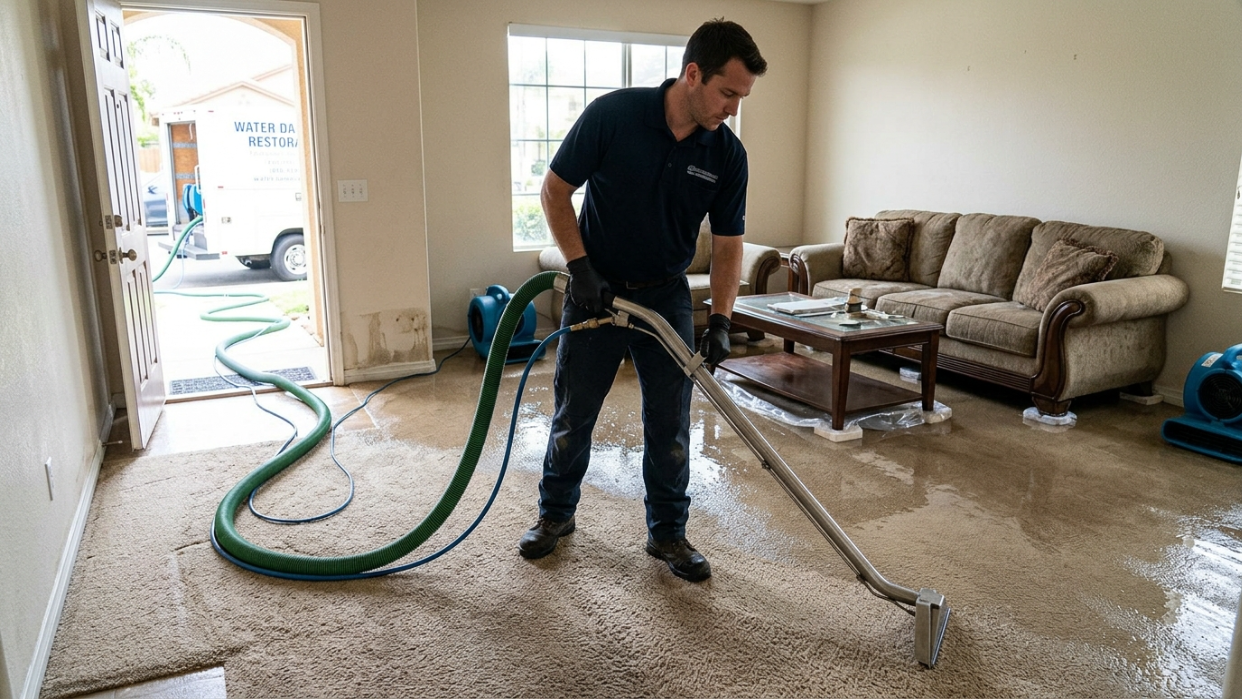
 When water floods into your home or building, every hour counts. A burst pipe at 2 a.m., an overflowing water heater, a slab leak under the living room, or storm water pushing under the door can saturate carpet, padding, drywall, and subfloor before you’ve even found the shutoff valve. That’s why dependable emergency water damage restoration in San Diego isn’t a luxury — it’s the difference between a fast, manageable recovery and weeks of mold, warped flooring, and rising repair bills.
At SoCal Steam Clean & Carpet Cleaning, water and carpets are what we know best. As San Diego’s professional carpet cleaning specialists, we help San Diego homeowners and commercial property owners respond quickly to water emergencies, pull standing water out, dry the structure and contents, and protect what can still be saved. Our goal is simple: stop the damage from spreading, dry things properly the first time, and get your space back to normal with as little stress as possible.
Why Fast Water Damage Response Matters
Water is deceptively destructive — as our guide on dealing with the headache of water damage explains, what looks like a small puddle on the surface has usually already wicked into carpet padding, traveled along baseboards, and soaked into the subfloor and lower drywall. Left alone for even a day or two, that moisture creates conditions for mold growth, persistent odor, and structural softening that are far more expensive to fix than the original leak.
The risks stack up fast:
- Mold and mildew can begin developing within roughly 24–48 hours in warm, damp conditions — and San Diego’s mild climate doesn’t slow it down.
- Hidden moisture behind walls and under floors keeps causing damage long after the visible water is gone.
- Contaminated water from sewage backups or storm intrusion carries health risks that require careful handling, not a shop vac and a towel.
- Delays void recovery. Carpet, padding, hardwood, and cabinetry that could have been saved with fast extraction often have to be removed entirely once they’ve sat wet.
Acting quickly protects your property, your indoor air quality, and your budget. The faster water is extracted and the structure is dried to proper moisture levels, the more of your home or building can be restored instead of replaced.
Common Water Damage Problems We Solve
 Water damage shows up in dozens of ways. These are the situations San Diego property owners most often call us about — and the symptoms that mean it’s time to act.
Burst or leaking pipes. Older copper lines, failed fittings, or a pipe that freezes on a rare cold night can release gallons of water fast. When a line lets go, fast water extraction is the first priority — the sooner the water is out, the more carpet, padding, and flooring can be saved.
Water heater failures and appliance overflows. A leaking water heater, a washing machine hose that lets go, or a dishwasher that overflows can flood a laundry room or kitchen in minutes.
Slab leaks. Water surfacing through flooring, warm spots on the floor, or an unexplained spike in your water bill can signal a leak under the foundation that needs both detection and drying.
Storm and rain intrusion. Heavy seasonal rain can push water under doors, through roofs, and into garages and ground floors — a common issue when San Diego’s dry stretches break into sudden downpours.
Sewage backups and gray-water flooding. These require careful, sanitary handling. For contaminated-water situations, proper cleanup and disinfection matter as much as drying — and lingering smells often call for professional odor removal once the area is dry.
Lingering dampness and musty odor. Sometimes the emergency is quieter — a slow leak you only noticed by smell. If you suspect hidden moisture, our drying tips for water damage explain why thorough drying matters before the damp sets in.
If you’re seeing any of these signs — discolored ceilings, buckling floorboards, peeling paint, soft spots in drywall, or that unmistakable damp smell — the safest move is to call for help rather than wait and see.
Our Water Damage Restoration Process
A good restoration follows a clear, proven sequence. We base our work on the industry-standard drying principles used across the restoration field, adapted to each property and each type of water loss.
Step 1 — Rapid Response and Assessment
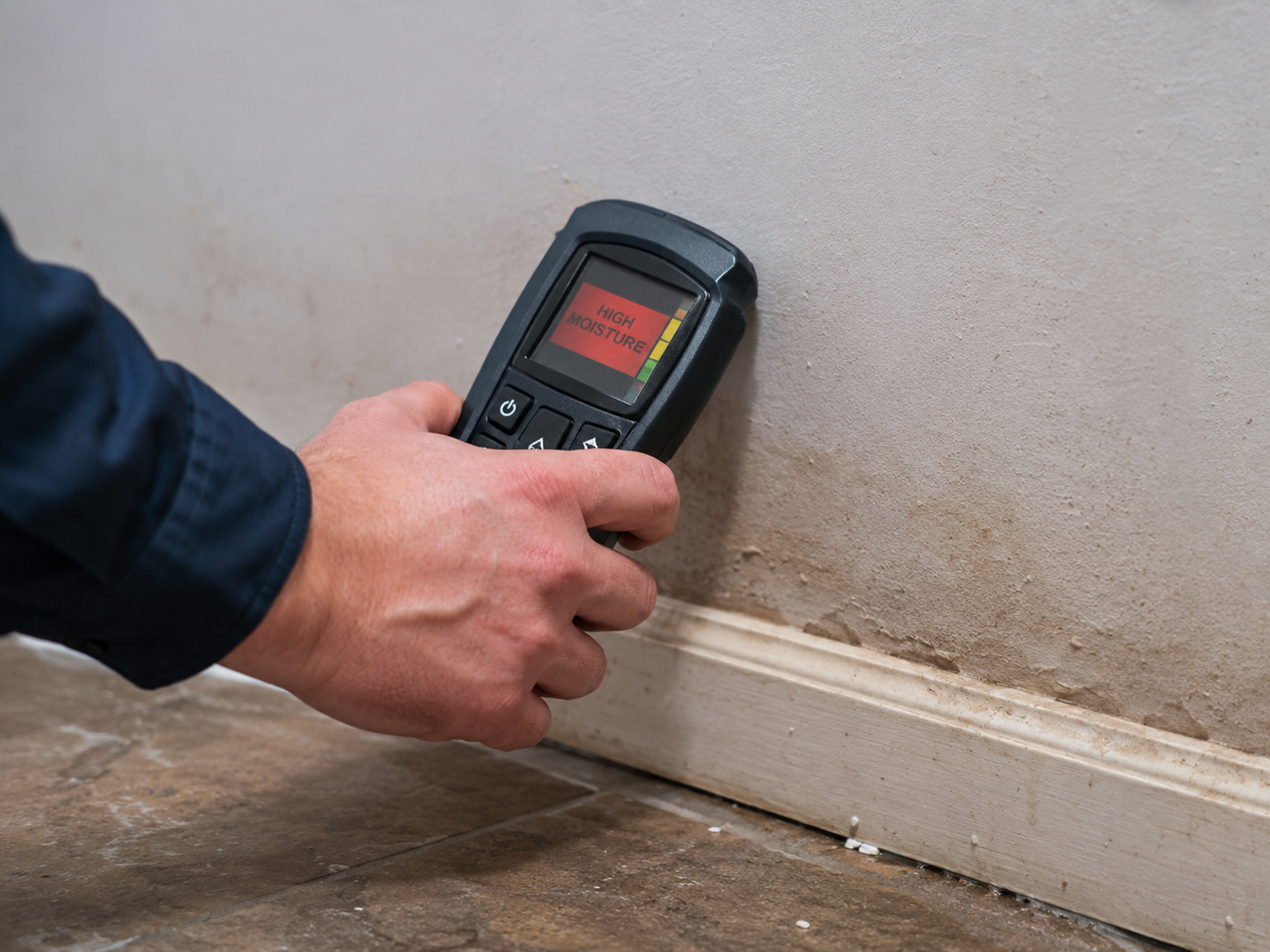
When you call, we gather the essentials, talk you through immediate safety steps (like shutting off the water source and power to affected areas if it’s safe), and dispatch a crew. On arrival, we inspect the affected areas and use moisture meters to find where water has actually traveled — not just where it’s visible.
Step 2 — Water Extraction
We remove standing water quickly using extraction equipment, pulling moisture out of carpet, padding, and hard surfaces before it spreads further. The faster the water comes out, the more materials we can save.
Step 3 — Drying and Dehumidification
We position air movers and dehumidifiers to dry the structure and contents to appropriate moisture levels. This stage is monitored over time, because surfaces can feel dry while padding, subfloor, and wall cavities are still holding water. For wood flooring in particular, controlled drying is critical — rushing or skipping it is how floors warp, so it’s treated as its own step.
Step 4 — Cleaning, Sanitizing, and Deodorizing
Affected carpets, upholstery, and surfaces are cleaned and, where needed, sanitized — especially important after gray-water or sewage events. Stubborn marks left behind by water lines and dirty water are handled with targeted stain and spot removal. As steam-cleaning specialists, restoring fabrics and carpet is core to what we do.
Step 5 — Final Check and Recommendations
We confirm the area is dry, document the work, and flag anything that may need further attention — for example, if materials are too saturated to save, or if conditions suggest a follow-up inspection. We’ll also let you know whether tile, grout, and stone cleaning would help restore hard-surface floors affected by the water.
Why Choose SoCal Steam Clean & Carpet Cleaning
When water is spreading through your property, you want a local team that answers, shows up, and knows how to dry things correctly.
- Water and carpet are our specialty. Steam cleaning and hot water extraction are at the heart of our business, which means extraction, cleaning, and recovery of carpet and upholstery are exactly the skills a water emergency demands.
- Local and responsive. We’re based right here in San Diego, so we understand local homes, climate, and the kinds of water problems that come up across the county.
- Methodical drying. We don’t just remove what’s visible — we measure moisture and dry to proper levels so problems don’t resurface weeks later as odor or mold.
- Clear communication. We explain what we’re doing and what to expect, so you’re never left guessing during a stressful situation.
We focus on doing the work right rather than overpromising. If a situation calls for services beyond our scope, we’ll tell you plainly and point you toward the right resource.
Emergency Water Damage Restoration in San Diego & Nearby Areas
Our home base sits in the 92128 area of San Diego, in the North County corridor, and we serve homeowners and commercial property owners across the region. Communities near us include Rancho Bernardo, Carmel Mountain Ranch, Sabre Springs, Rancho Peñasquitos, Scripps Ranch, 4S Ranch, Poway, and the surrounding North County neighborhoods.
San Diego’s water-damage profile is shaped by its property mix and climate. Slab-on-grade construction is common across the county, which means slab leaks and ground-floor water intrusion are recurring issues. Many homes feature carpeted living spaces and the kind of fine wood and tile flooring that needs careful, controlled drying. Our generally mild, dry weather is a double-edged sword: it gives leaks time to go unnoticed, then sudden seasonal storms arrive and overwhelm drainage in driveways, garages, and ground floors all at once.
Older neighborhoods bring aging supply lines and original plumbing prone to failure, while newer master-planned communities have their own appliance and fixture risks. Multi-unit buildings, HOAs, and commercial properties add another layer, where one unit’s leak can quickly become several units’ problem. Whatever the property type, fast, same-day response keeps a contained incident from becoming a building-wide one.
Restoration Cost, Timeline & What to Expect
Every water emergency is different, so honest restoration pricing depends on the specifics rather than a one-size-fits-all number. The same is true of routine work — our guide to professional steam carpet cleaning costs shows how scope and conditions shape any quote.
What affects cost:
- The amount of water and area affected — a single room versus multiple rooms or floors.
- The water category — clean supply-line water is simpler than gray water or sewage, which requires extra sanitizing.
- What got wet — carpet and padding dry differently than hardwood, tile, drywall, and cabinetry.
- How long it sat — water caught early is far cheaper to address than water that’s been wicking for days.
- Equipment and drying time — larger or wetter losses need more air movers and dehumidifiers running longer.
Timeline. Extraction often happens on the first visit, while structural drying typically continues over several days as equipment runs and moisture levels are monitored — for context on how long carpets take to dry, see our guide. Heavier losses, wood flooring, or contaminated water can extend the process.
Insurance. Many homeowners’ policies cover sudden, accidental water damage. Documentation matters, so keep photos and records before cleanup begins. We can discuss what documentation we provide for your claim.
The most important variable is speed. Calling quickly almost always lowers both the cost and the timeline — because the less time water has to spread, the less there is to dry, clean, and replace.
Don’t Wait — Call for Emergency Water Damage Restoration in San Diego Now
Water damage only gets worse — and more expensive — the longer it sits. If you’ve got a burst pipe, a flooded floor, a leaking water heater, or standing water anywhere in your San Diego home or building, act now.
Call SoCal Steam Clean & Carpet Cleaning at (858) 381-7872 for fast emergency water damage restoration in San Diego. We’ll talk you through the immediate steps, get a crew headed your way, and start protecting your property right away. Not an emergency? You can also request a quote online.
📞 (858) 381-7872 ✉️ socalsteamclean@gmail.com 📍 10553 Harvest View Way, San Diego, CA 92128
The faster you call, the more we can save. Reach out now and let’s get your space dry, clean, and back to normal.
Frequently Asked Questions
How fast should I respond to water damage?
How fast should I respond to water damage?
As fast as possible. Mold can begin developing in roughly 24–48 hours, and water keeps spreading into padding, subfloor, and walls the entire time it sits. The sooner standing water is extracted and drying begins, the more of your property can be saved. If it’s safe, shut off the water source and affected power, then call for emergency water damage restoration right away rather than waiting to assess the full extent yourself.
Do you offer emergency water damage restoration in San Diego around the clock?
Do you offer emergency water damage restoration in San Diego around the clock?
We provide emergency response for San Diego water damage situations. Because availability and response windows can vary with conditions and demand, the fastest way to confirm immediate dispatch is to call us directly at (858) 381-7872. When you reach us, we’ll walk you through immediate safety steps and get a crew moving toward your property as quickly as possible.
Can wet carpet be saved, or does it have to be replaced?
Can wet carpet be saved, or does it have to be replaced?
It depends on how long it stayed wet and what kind of water caused it. Carpet soaked by clean water and extracted quickly can often be dried, cleaned, and saved. Padding underneath is more vulnerable and frequently needs replacing. Carpet exposed to sewage or contaminated water usually can’t be safely restored. Because carpet and steam cleaning are our specialty, we focus on saving what’s recoverable — and on keeping carpets smelling fresh afterward wherever it’s safe to do so.
Will my homeowners insurance cover water damage restoration?
Will my homeowners insurance cover water damage restoration?
Many policies cover sudden, accidental water damage — like a burst pipe or appliance failure — while gradual leaks from deferred maintenance are often excluded. Coverage varies by policy, so review your terms and document everything with photos and notes. Keeping clear records of the damage and the work performed helps support your claim. We’re happy to discuss what documentation we can provide to assist your insurer.
What’s the difference between water cleanup and full restoration?
What’s the difference between water cleanup and full restoration?
Cleanup generally refers to extracting water and drying the space. Full restoration can extend to repairing or rebuilding damaged materials and addressing any resulting mold. The right scope depends on how much damage occurred and how long water was present. After assessing your situation, we’ll explain what your property needs and recommend the appropriate next steps, including referrals for any work beyond water extraction and drying.
How do I know if there’s hidden water damage?
How do I know if there’s hidden water damage?
Watch for musty odors, discolored or sagging ceilings, peeling paint, buckling or soft flooring, and an unexplained jump in your water bill. These often signal moisture you can’t see directly. Surface dryness can be misleading because padding and wall cavities hold water longer, which is also why spots can keep reappearing after a surface dries. Professional moisture meters can confirm whether hidden water is present so it can be dried before it causes mold or structural problems.