



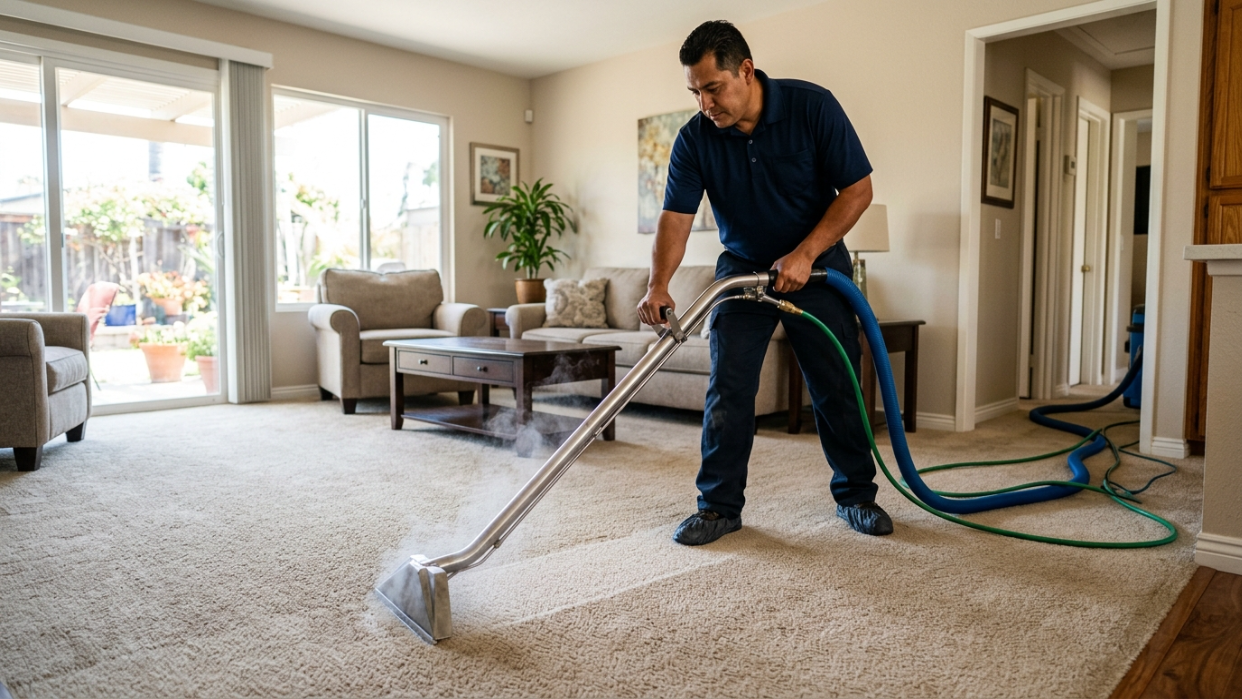
 For most San Diego households, carpet steam cleaning is the better choice when you want the deepest possible clean, allergen removal, and long-term fiber health — while dry carpet cleaning wins when you need your rooms usable within the hour and minimal moisture is the priority. The right pick in the carpet steam cleaning vs dry carpet cleaning debate ultimately comes down to three things: how dirty your carpets are, how quickly you need them back in service, and the fiber type you own.
This guide breaks down exactly how each cleaning method works, what each typically costs, and which scenarios favor one approach over the other — so you can make a confident, informed decision rather than a sales-pressured one.
Understanding Carpet Steam Cleaning
Carpet steam cleaning — known in the industry as hot water extraction — is the method most professionals consider the gold standard for deep cleaning. Despite the name, it doesn’t rely on actual steam vapor alone. Instead, the machine heats water to a high temperature, injects it into the carpet pile along with a cleaning solution under pressure, and then immediately extracts the water, dissolved soil, allergens, and residue back out with a powerful vacuum.
The heat and agitation loosen embedded dirt deep in the fibers and backing — the grime a household vacuum simply can’t reach. Because the dirty water is pulled back out, steam cleaning physically removes contaminants from your home rather than just relocating them.
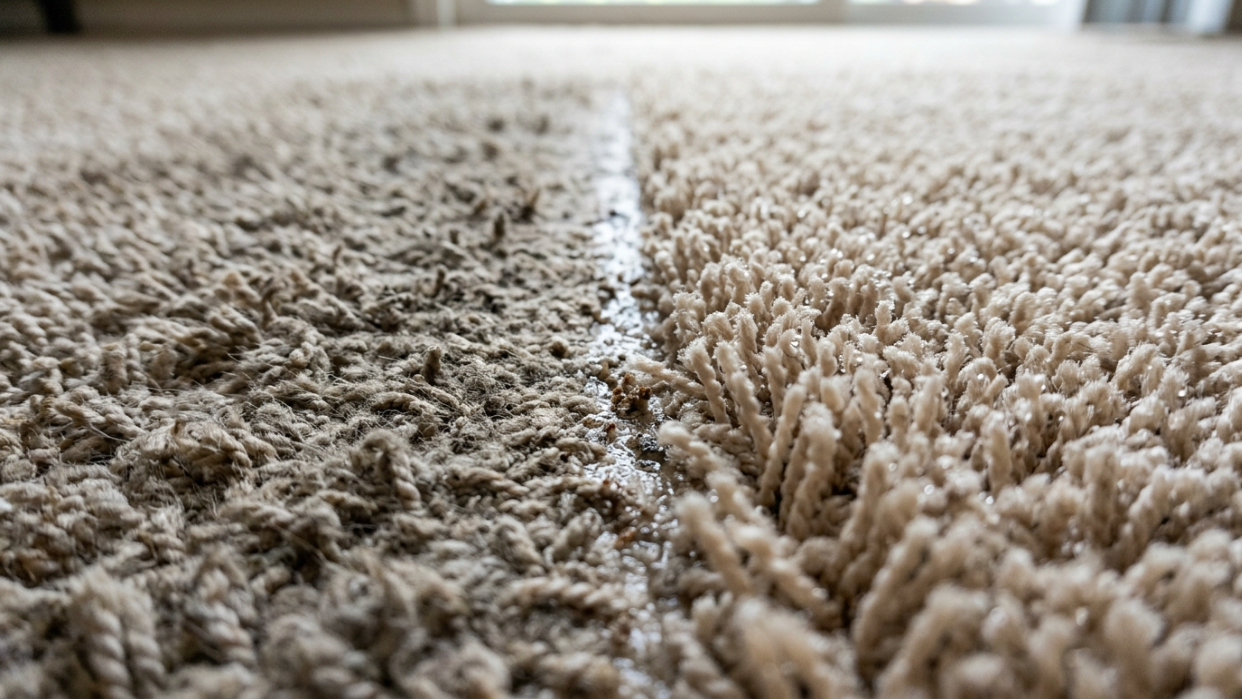 How it works in practice: A technician pre-treats heavily soiled areas and stains, runs the extraction wand across the carpet in overlapping passes, and may finish with a grooming and protector application. The process is thorough, and it’s particularly effective at flushing out the fine dust and pollen that drift into homes across coastal and inland San Diego neighborhoods alike.
Typical costs: Professional carpet steam cleaning generally runs in the range of roughly $0.30–$0.60 per square foot, or commonly $120–$300 for a standard multi-room job, depending on square footage, soil level, and add-ons like stain treatment or fiber protection. Larger homes or homes with significant pet soiling sit at the higher end.
Core benefits: The deepest available clean, strong allergen and dust-mite reduction, effective odor and bacteria removal, and manufacturer approval — most major carpet warranties specifically require periodic hot water extraction.
Ideal use cases: Annual or semi-annual deep cleans, allergy-sensitive households, homes with pets or kids, post-construction cleanup, and any carpet that hasn’t been professionally serviced in over a year.
Understanding Dry Carpet Cleaning
Dry carpet cleaning is a low-moisture family of methods designed to clean carpets with little to no water, so they’re walkable almost immediately. The most common approaches are encapsulation (a polymer-based cleaning solution that crystallizes around soil particles so they can be vacuumed away) and the compound/dry powder method (an absorbent, slightly moist compound worked into the carpet with a machine, then vacuumed up along with the dirt it binds).
Rather than flushing the carpet with water, dry cleaning relies on chemistry and mechanical agitation. A counter-rotating brush or pad machine works the cleaning agent through the pile, the solution captures the soil, and a thorough vacuuming removes the spent compound.
How it works in practice: The technician applies the dry compound or encapsulation solution, agitates it into the fibers, allows a short dwell time, and vacuums. There’s no extraction wand and no saturation, which is why the carpet feels dry — or nearly so — right after the service.
Typical costs: Dry carpet cleaning is often priced comparably to steam cleaning, roughly $0.25–$0.55 per square foot, though pricing varies by provider and method. Encapsulation in particular is popular for commercial spaces because it’s fast and cost-efficient at scale.
Core benefits: Near-immediate dry times (often 20 minutes to 1–2 hours), very low risk of over-wetting, and convenience for spaces that can’t afford downtime.
Ideal use cases: Offices and high-traffic commercial floors, light-to-moderate maintenance cleaning between deep cleans, delicate or moisture-sensitive carpets, and situations where rooms must be reoccupied quickly.
Side-by-Side Comparison
| Attribute | Carpet Steam Cleaning (Hot Water Extraction) | Dry Carpet Cleaning (Encapsulation/Compound) |
|---|---|---|
| Cleaning Depth | Deep — reaches backing and embedded soil | Surface to mid-pile — best for lighter soil |
| Dry Time | ~4–10 hours (longer in humidity) | ~20 minutes to 2 hours |
| Upfront Cost | ~$120–$300 / standard job | Comparable; often efficient at scale |
| Allergen & Bacteria Removal | Excellent — flushes out contaminants | Moderate — binds and lifts surface soil |
| Moisture Risk | Higher — requires proper drying | Very low — minimal water used |
| Warranty Compliance | Usually required by carpet makers | Often supplemental, not a substitute |
| Best For | Deep annual cleans, pets, allergies | Quick turnarounds, offices, maintenance |
Pros and Cons Breakdown
Pros of Carpet Steam Cleaning
- Deepest clean available — extracts soil from deep in the pile and backing, not just the surface.
- Superior allergen control — flushes out dust, pollen, and dust-mite debris, a real benefit during San Diego’s pollen-heavy spring months.
- Removes odors at the source — especially effective on pet accidents and bacteria, and a strong option when you need full odor removal rather than just masking smells.
- Warranty-friendly — satisfies the periodic hot water extraction most carpet manufacturers require.
Cons of Carpet Steam Cleaning
- Longer dry times — carpets can stay damp for several hours, more in humid coastal air.
- Risk if done improperly — over-wetting or inadequate drying can invite mildew, which is why professional extraction matters.
- Rooms are out of use until dry.
Pros of Dry Carpet Cleaning
- Fast turnaround — carpets are usable almost immediately, ideal for businesses.
- Minimal moisture — virtually eliminates the risk of over-wetting and mold.
- Convenient — little disruption to a busy household or office schedule.
- Gentle on moisture-sensitive or delicate fibers.
Cons of Dry Carpet Cleaning
- Less deep — may leave embedded soil and deep stains behind.
- Chemical residue potential — some compounds can leave behind material if not fully vacuumed.
- Not a full substitute — rarely satisfies manufacturer deep-clean requirements on its own.
Which Option Is Better? The Ultimate Showdown
When you weigh cost against long-term benefit, the carpet steam cleaning vs dry carpet cleaning decision rarely comes down to price — the two are often close. It comes down to outcome and timing.
Choose carpet steam cleaning if your priority is the deepest, most thorough clean. If you have pets, young children, allergy sufferers, visible traffic lanes, or carpets that haven’t been deep-cleaned in over a year, hot water extraction is the clear winner. It’s also the safer bet for protecting your manufacturer warranty. The trade-off is drying time — and in San Diego’s more humid coastal pockets like those near La Jolla or Del Mar, that means planning for proper airflow and patience while carpets dry.
Choose dry carpet cleaning if your priority is speed and minimal moisture. For a San Diego office that can’t shut down for an afternoon, a rental property needing a fast turnaround between tenants, or routine maintenance between annual deep cleans, dry cleaning is hard to beat. It’s also the smarter choice for genuinely moisture-sensitive carpets.
The honest professional take: Many San Diego homes are best served by a hybrid rhythm — annual or semi-annual steam cleaning for the deep reset, with low-moisture dry cleaning in between to keep things fresh. If keeping your home’s footprint light matters to you, ask about eco-friendly cleaning options for either method. You get depth when you need it and convenience the rest of the year.
Get Expert Guidance for Your San Diego Home
Not sure which method fits your carpets, your schedule, and your budget? The team at SoCal Steam Clean is happy to walk you through it — no pressure, just an honest recommendation based on your fibers, soil level, and goals. Reach out for a free consultation or request a quote, and we’ll help you choose between steam and dry cleaning with confidence. Explore our carpet cleaning in San Diego service to get started.
Conclusion & Recommendation
In the carpet steam cleaning vs dry carpet cleaning matchup, there’s no single winner for every home — but there is a clear winner for each situation. For deep cleaning, allergen removal, pet odors, and warranty compliance, carpet steam cleaning is the recommended choice for most San Diego homeowners. For fast turnarounds, low moisture, and maintenance between deep cleans, dry carpet cleaning is the smarter pick. The best long-term strategy for many San Diego households blends both — periodic steam cleaning for depth, dry cleaning for convenience.
Frequently Asked Questions
1. Is carpet steam cleaning better than dry carpet cleaning?
1. Is carpet steam cleaning better than dry carpet cleaning?
For deep cleaning, allergen removal, and odor elimination, carpet steam cleaning generally outperforms dry cleaning because it extracts soil from deep in the fibers and backing. Dry cleaning is better when speed and minimal moisture matter most. The “better” method depends on your carpet’s condition and your timing needs.
2. How long does carpet take to dry after steam cleaning in San Diego?
2. How long does carpet take to dry after steam cleaning in San Diego?
Typically 4 to 10 hours, though coastal humidity near areas like La Jolla or Del Mar can extend that. Good airflow, fans, and air conditioning speed up drying considerably. Dry carpet cleaning, by contrast, is usually walkable within 20 minutes to a couple of hours.
3. Does dry carpet cleaning actually get carpets clean?
3. Does dry carpet cleaning actually get carpets clean?
Yes, for light-to-moderate soil. Encapsulation and compound methods effectively lift surface and mid-pile dirt and are popular for offices and maintenance cleaning. They’re less effective than steam cleaning on deeply embedded soil, heavy stains, or set-in pet odors.
4. Which method is safer for pets and kids?
4. Which method is safer for pets and kids?
Both can be safe when done professionally. Steam cleaning uses heat and extraction and is excellent at removing allergens and bacteria, while many dry methods use low-residue compounds. If you have specific sensitivities, ask about eco-friendly or pet-safe cleaning solutions.
5. Will steam cleaning damage my carpet or cause mold?
5. Will steam cleaning damage my carpet or cause mold?
Not when performed correctly. Mold risk comes from over-wetting and poor drying — which is precisely why professional extraction and proper airflow matter. A reputable technician extracts thoroughly and advises on drying, keeping moisture risk low even in San Diego’s humid coastal zones.
6. How often should I have my carpets professionally cleaned?
6. How often should I have my carpets professionally cleaned?
Most San Diego homes benefit from a professional deep clean every 6 to 12 months, more often with pets, kids, or allergies. Many households alternate annual steam cleaning with lighter dry cleaning in between for ongoing freshness.
7. Is dry carpet cleaning cheaper than steam cleaning?
7. Is dry carpet cleaning cheaper than steam cleaning?
Pricing is often comparable, roughly $0.25–$0.60 per square foot for either method depending on the provider, soil level, and add-ons. Dry cleaning can be more cost-efficient at scale for large commercial spaces, while steam cleaning’s value lies in its cleaning depth.
8. Can I do steam or dry cleaning myself?
8. Can I do steam or dry cleaning myself?
Rental machines exist for both, but DIY results rarely match professional equipment, which uses higher heat, stronger extraction, and proper chemistry. Improper DIY steam cleaning in particular risks over-wetting. For deep cleans and stubborn stains, professional service is usually worth it.
9. Which method is best for high-traffic areas?
9. Which method is best for high-traffic areas?
For heavily soiled traffic lanes, steam cleaning’s deep extraction is most effective at fully restoring the fibers. For routine upkeep of busy commercial floors that can’t close, dry encapsulation is a practical, low-downtime option.