



Choosing between deep heat and fast-drying chemistry is the most common question San Diego homeowners ask before booking a service — and the right answer depends entirely on what your carpet needs.
For a deep, restorative clean that lifts embedded dirt, allergens, and pet odors, steam cleaning (hot water extraction) is the better choice. For quick maintenance, low-moisture turnaround, or delicate fibers that can’t tolerate saturation, chemical (low-moisture) carpet cleaning wins. Most carpet manufacturers recommend hot water extraction for a thorough clean, while chemical methods shine when speed and minimal drying time matter most. Below, we break down how each method works, what it costs, and exactly when to pick one over the other.
Understanding Steam Cleaning (Hot Water Extraction)
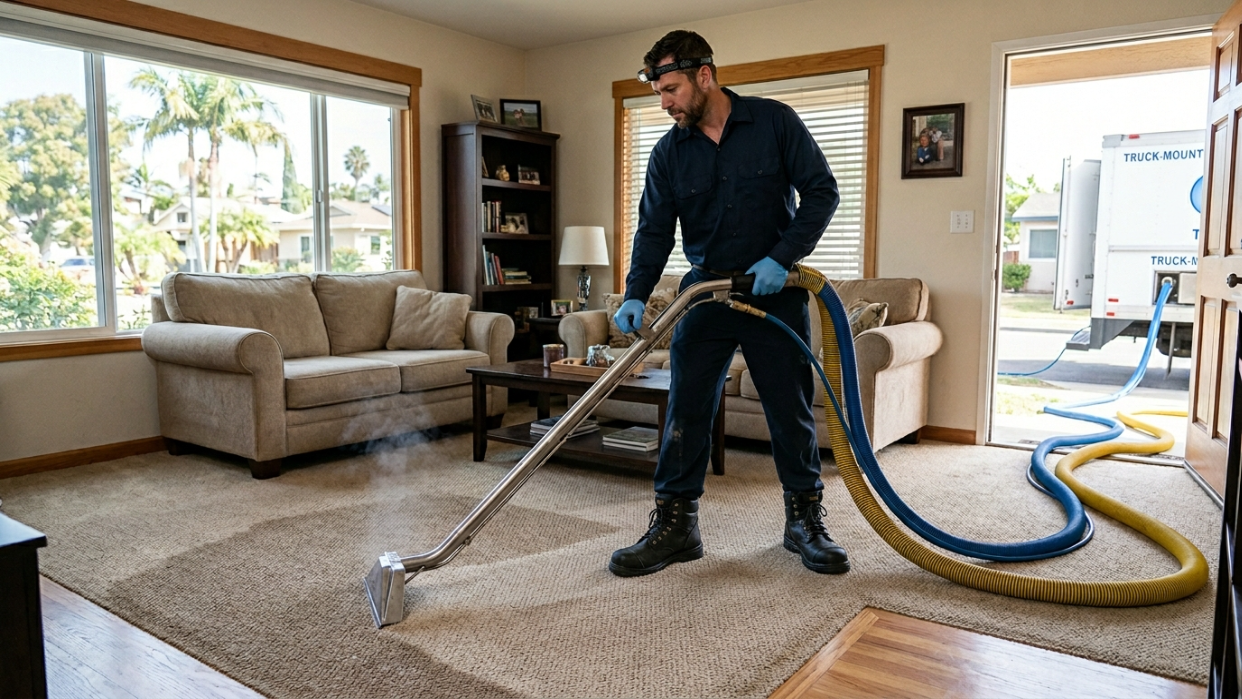 Despite the name, true “steam cleaning” doesn’t actually blast your carpet with steam. The industry term is hot water extraction, and it’s the gold standard professionals reach for when carpets need a genuine deep clean.
How it works: A machine heats water to a high temperature, mixes it with a cleaning solution, and injects it into the carpet pile under pressure. That hot solution loosens dirt, oils, dust mites, and bacteria bonded to the fibers. A powerful vacuum then extracts the dirty water back out — pulling the suspended grime with it. Truck-mounted units (the most powerful option) generate far more heat and suction than the rental machines you’ll find at a grocery store.
Typical costs: In the San Diego market, expect roughly $0.25–$0.50 per square foot, or about $35–$70 per room, with whole-home jobs commonly landing between $150 and $300 depending on square footage, soil level, and stair counts.
Core benefits: It reaches deep into the pile, removes the widest range of contaminants, and is the method most flooring warranties specifically call for. For households battling allergens, pet accidents, or years of foot traffic, nothing else cleans as completely.
Ideal use cases: Annual or semi-annual deep cleans, homes with pets or children, allergy-prone families, post-flood recovery, and any carpet that simply hasn’t been professionally cleaned in a long time.
Understanding Chemical (Low-Moisture) Carpet Cleaning
“Chemical carpet cleaning” is an umbrella term for several low-moisture methods — encapsulation, dry compound, and bonnet cleaning — that rely on specialized cleaning agents instead of large volumes of hot water.
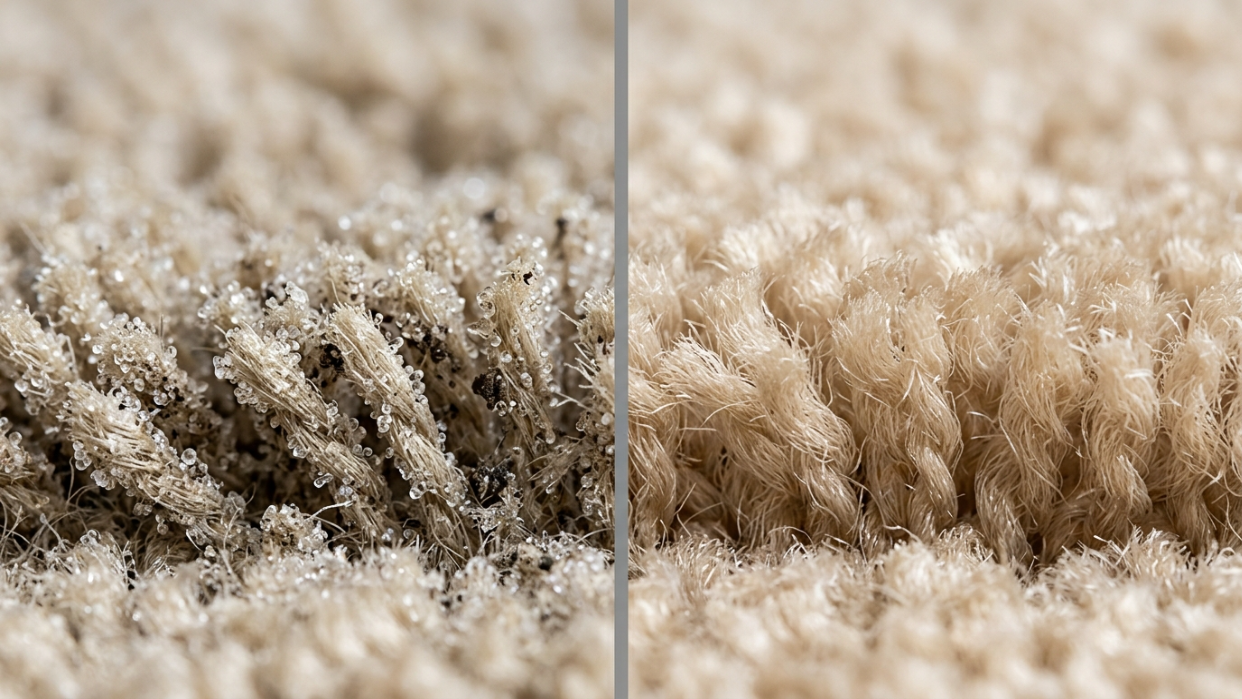
How it works: Rather than flushing the carpet, these methods apply a chemical that does the heavy lifting. In encapsulation, a polymer solution surrounds each dirt particle, crystallizes as it dries, and is then vacuumed away. Dry compound cleaning spreads an absorbent, solvent-carrying material into the pile that binds to soil before being vacuumed. Bonnet cleaning uses a rotating absorbent pad with a cleaning solution to clean the carpet’s surface layer.
Typical costs: Low-moisture cleaning runs in a similar range — roughly $0.20–$0.45 per square foot, or about $30–$60 per room. Commercial encapsulation jobs are often priced lower per square foot at volume.
Core benefits: The standout advantage is speed. Carpets dry in 1–2 hours instead of several, so furniture goes back and rooms return to use almost immediately. There’s also far less risk of over-wetting, which makes these methods friendlier to certain delicate or natural fibers.
Ideal use cases: Routine maintenance between deep cleans, busy commercial spaces that can’t close for hours, lightly soiled carpets, and situations where fast drying is non-negotiable — like a same-day move-in.
Side-by-Side Comparison Table
| Attribute | Steam Cleaning (Hot Water Extraction) | Chemical (Low-Moisture) Cleaning |
|---|---|---|
| Cleaning Depth | Deep — reaches the base of the pile | Surface to mid-pile |
| Dry Time | 6–12 hours (sometimes longer in humid coastal air) | 1–2 hours |
| Typical Cost | $35–$70 per room | $30–$60 per room |
| Water Usage | High | Minimal |
| Best For | Deep cleans, allergens, pet odors, warranties | Maintenance, commercial, quick turnaround |
| Allergen/Bacteria Removal | Excellent | Moderate |
| Over-Wetting Risk | Possible if under-extracted | Very low |
| Manufacturer Recommendation | Most common warranty-approved method | Varies by manufacturer |
Pros and Cons Breakdown
Pros of Steam Cleaning
- Deepest clean available — flushes out dirt, dust mites, and allergens bonded deep in the fibers.
- Best for odors and pet stains — hot water and extraction lift contaminants that surface methods leave behind.
- Warranty-friendly — frequently the method carpet manufacturers require to keep coverage valid.
- Sanitizes effectively — high temperatures help reduce bacteria and microbes.
Cons of Steam Cleaning
- Longer dry time — rooms can be out of use for much of a day, longer in San Diego’s coastal humidity.
- Over-wetting risk — an under-powered machine or rushed job can leave carpets too damp, risking mildew.
- Heavier equipment — best results come from professional truck-mounted units, not rentals.
Pros of Chemical (Low-Moisture) Cleaning
- Fast drying — carpets are usable again in about an hour or two.
- Low over-wetting risk — minimal water means almost no chance of saturation or mold.
- Great for commercial spaces — clean overnight or between shifts with no closure.
- Gentle on certain fibers — a safer option for some delicate or natural materials.
Cons of Chemical (Low-Moisture) Cleaning
- Shallower clean — less effective on deeply embedded dirt and heavy soil.
- Residue potential — some methods can leave behind cleaning compound if not vacuumed thoroughly.
- Not ideal for heavy pet odors — surface cleaning may not reach urine that has soaked into the pad.
Which Option Is Better? The Ultimate Showdown
When you weigh upfront cost against long-term results, the steam cleaning vs chemical carpet cleaning decision really comes down to depth versus speed.
The two methods cost about the same per visit, so price alone rarely decides it. The deciding factor is the outcome you need. Steam cleaning delivers more cleaning power per dollar over time because it removes the soil that low-moisture methods leave behind — meaning fewer “the carpet looks dirty again already” moments and a longer interval between services. Chemical cleaning, by contrast, delivers more convenience per dollar: you get a presentable carpet back in under two hours with virtually no disruption.
Choose steam cleaning if your priority is a thorough, restorative deep clean — you have pets, allergies, young kids, visible traffic lanes, or a manufacturer warranty to protect. For most San Diego households, this is the right call once or twice a year.
Choose chemical (low-moisture) cleaning if your priority is speed and minimal downtime — you’re maintaining already-clean carpets, running a commercial space that can’t close, or dealing with a fiber type that shouldn’t be saturated.
The smartest approach for many San Diego homes is actually a hybrid: an annual steam clean for depth, with low-moisture maintenance cleans in between. If you’re unsure which fits your situation, a quick assessment of your carpet’s age, fiber, and soil level will point you to the right method — you can compare both cleaning approaches in more detail in our San Diego methods guide.
Get Expert Advice for Your San Diego Home
Still not sure whether steam cleaning vs chemical carpet cleaning is right for your floors? You don’t have to guess. The team at SoCal Steam Clean has cleaned carpets across San Diego — from coastal La Jolla condos to Scripps Ranch family homes — and can recommend the method that matches your carpet, your schedule, and your budget. Get a free, no-pressure carpet cleaning quote and we’ll help you make the right call.
Conclusion & Recommendation
When comparing steam cleaning vs chemical carpet cleaning, there’s no single winner — only the right tool for the job. Steam cleaning (hot water extraction) is the better choice for deep, restorative cleaning, especially for San Diego homes with pets, allergies, or carpets that haven’t been cleaned in a while. Chemical low-moisture cleaning is the better choice for fast, low-disruption maintenance. For most homeowners, an annual deep steam clean paired with occasional low-moisture touch-ups delivers the best of both worlds: clean, healthy carpets that stay that way longer.
Frequently Asked Questions
1. Is steam cleaning or chemical carpet cleaning better for pet odors?
1. Is steam cleaning or chemical carpet cleaning better for pet odors?
Steam cleaning is generally better for pet odors because hot water extraction can reach urine and bacteria that have soaked deep into the pile and padding, which surface-level chemical methods often can’t fully remove.
2. How long does carpet take to dry after steam cleaning in San Diego?
2. How long does carpet take to dry after steam cleaning in San Diego?
Most carpets dry in 6–12 hours after steam cleaning, though San Diego’s coastal humidity can extend that. Low-moisture chemical cleaning typically dries in just 1–2 hours.
3. Does steam cleaning use harsh chemicals?
3. Does steam cleaning use harsh chemicals?
Not necessarily. Hot water extraction relies primarily on heat, water, and suction, often with a mild cleaning agent. Many providers, including eco-conscious San Diego services, offer green solutions for steam cleaning.
4. Which method is cheaper, steam or chemical carpet cleaning?
4. Which method is cheaper, steam or chemical carpet cleaning?
Costs are comparable, typically $30–$70 per room for either method. Steam cleaning can offer better long-term value because it cleans more deeply and may extend the time between cleanings.
5. Can chemical carpet cleaning damage my carpet?
5. Can chemical carpet cleaning damage my carpet?
When done professionally, low-moisture cleaning is safe. Poorly executed bonnet cleaning or excessive chemical residue can dull fibers over time, so technique and proper vacuuming matter.
6. How often should I have my carpets cleaned in San Diego?
6. How often should I have my carpets cleaned in San Diego?
Most households benefit from a professional cleaning every 6–12 months, more often with pets, kids, or heavy traffic. Manufacturers frequently recommend hot water extraction to maintain warranty coverage.
7. Will steam cleaning shrink or damage my carpet?
7. Will steam cleaning shrink or damage my carpet?
Properly performed hot water extraction with adequate suction is safe for most carpets. Shrinkage risk comes from over-wetting and under-extraction, which is why professional, well-powered equipment matters.
8. Is low-moisture cleaning better for delicate or natural fibers?
8. Is low-moisture cleaning better for delicate or natural fibers?
Often, yes. Because it uses far less water, low-moisture chemical cleaning reduces the risk of over-saturating sensitive natural fibers, though you should always confirm the right method for your specific carpet.